
RUCOOL Hurricane Science Team
The RUCOOL Hurricane Science Team develops and uses advanced observing technologies and models to better understand coupled ocean-atmospheric processes in hurricanes and typhoons, specifically helping forecasters to better predict intensity at land fall.
A Growing Need for Hurricane Science
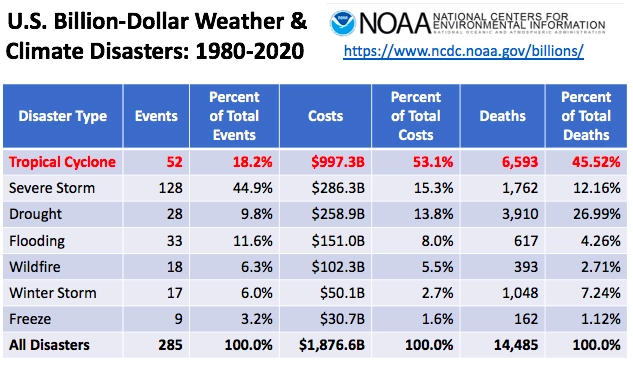
Hurricanes, typhoons & tropical cyclones are among the most destructive natural events on Earth. In the U.S. alone:
- U.S. hurricane damages since 1980 are approaching One Trillion Dollars, more than all other weather and climate disasters combined.
- U.S. hurricane related deaths since 1980 exceed 6,500 people, more than any other category of weather or climate disaster.
- U.S. states and territories impacted by North Atlantic hurricanes represent nearly half the U.S. population (U.S. Census Bureau).
- Hurricanes have become more severe over the last 40 years.
- The baseline sea level for hurricane storm surge is rising.
Continued advances in hurricane science, leading to increased forecast accuracy and lead times, is required to promote more timely and effective hurricane responses that save lives, property and livelihoods.
RUCOOL Contributions
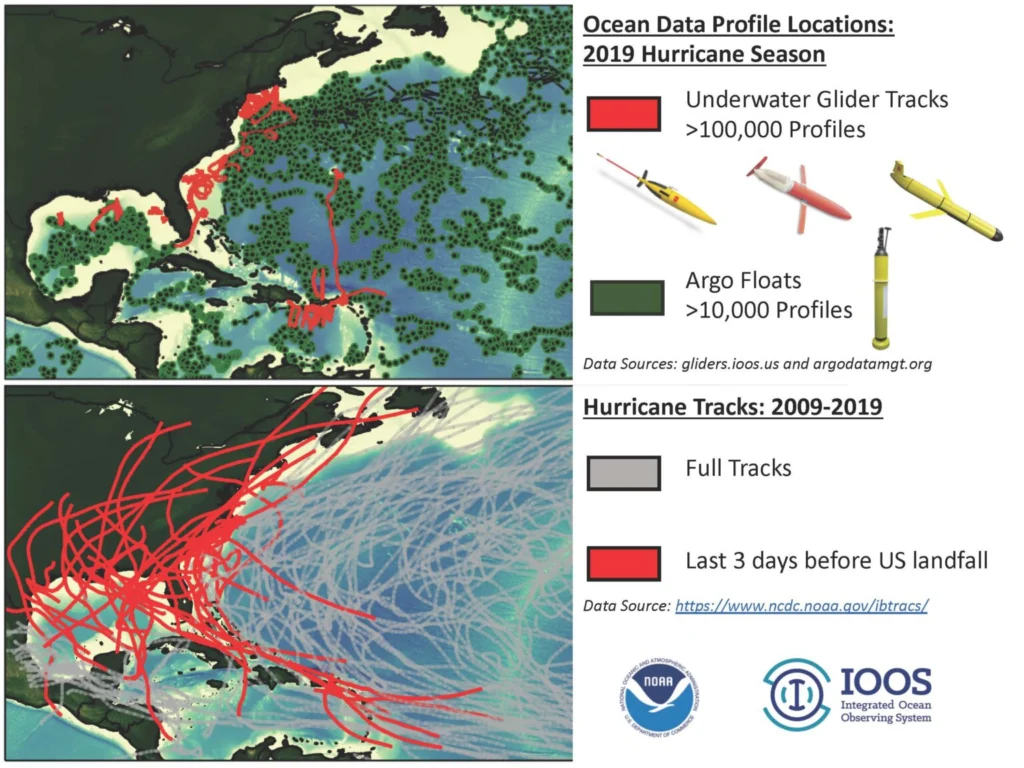
Improving hurricane forecasts is a broad collaborative effort that crosses government agencies, industry sectors, and academic fields. Our focus at RUCOOL is on improved understanding of the rapid co-evolution of the ocean and atmosphere as hurricanes approach landfall. A key observational component supporting both research needs and operational forecasting has been establishing the Hurricane Glider Picket Lines in the U.S. IOOS regions impacted by the landfalling hurricanes.
Data and Visualization Resources
IOOS Model Evaluations
Data and Visualization Links
- IOOS Environmental Data Server Model Viewer
- IOOS Glider DAC
- IOOS Glider DAC Daily Statistics
- IOOS HF Radar DAC
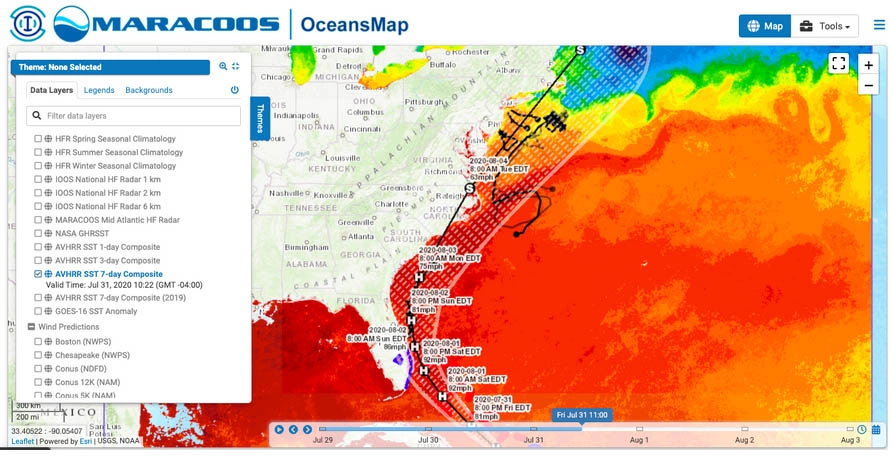
- MARACOOS OceansMap
- NOAA Experimental Hurricane Analysis and Forecast System v0.1a (HAFS)
- NOAA/AOML Hurricane Ocean Viewer
- NOAA National Hurricane Center
- NOAA Operational Hurricane Weather Research and Forecasting model (HWRF)
- NOAA Operational Hurricanes in a Multi-scale Ocean coupled Non-hydrostatic model (HMON)
- NOAA Observing System Monitoring Center
- Rutgers Real-time Glider Maps & Data
- Rutgers Hurricane Blog