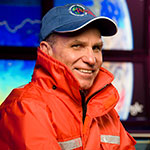
Distinguished Professor
Scott Glenn
Research Interests
My research interests include the development of new autonomous ocean observing technologies, their application to scientific research in remote and extreme environments, and the demonstration of new educational paradigms. My technology development work focuses on autonomous systems that can be operated remotely as distributed networks to improve the spatial sampling of complex environments. A major scientific focus is extreme events, including storms, hurricanes and typhoons, investigating with observations and numerical models the linkages between the ocean, the atmosphere above, and the seabed below. My educational activities are designed to better prepare students to meet the challenges of a changing environment using modern observatories to explore the global ocean.
Short History
After graduating from the Massachusetts Institute of Technology and Woods Hole Oceanographic Institution Joint Program in 1983 with a Sc.D. in Ocean Engineering, I began an over 30-year research career of implementing sustained real-time ocean observation and forecast systems first for offshore oil exploration at Shell Development Company (1983-1986), then for the Naval Oceanography Command supporting fleet operations while at Harvard University (1986-1990), and, since 1990, for a wide range of scientific and societal applications at Rutgers University. In the only U.S. national program to recognize excellence in undergraduate teaching, I was named one of the U.S. Professors of the Year representing the State of New Jersey by the Carnegie Foundation for the Advancement of Teaching and the Council for Advancement and Support of Education.
Teaching Efforts
Dynamics of Waves, Currents and Sediment Transport (Oceanography – Grad)
Ocean Observatories Research Course (Marine and Coastal Sciences – Undergrad)
Oceanography House (Marine and Coastal Sciences – Undergrad)
Ocean Methods and Data Analysis (Marine and Coastal Sciences – Undergrad)
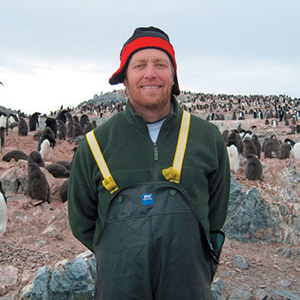
Distinguished Professor and Department Chair
Oscar Schofield
Downloads
Research Interests
I am a biological oceanographer interested how the physics and chemistry regulates ocean ecosystems, with a primary research focus on the physiology and ecology of phytoplankton. My research is conducted in a range of oceans from the rapidly warming/melting along the West Antarctic Peninsula to sustained studies along the northeast United States. Additionally I am part of the Center of Ocean Observing Leadership (COOL), which is focused on developing new technologies and ocean sensor networks to better document and model the marine system. The COOL group has, and continues, to innovate a range of technologies spanning from remote sensing, radars, and autonomous underwater robotics. Our research efforts are coupled to an extensive public outreach effort focused on communicating the excitement and adventure of conducting science in the field. These outreach efforts have been anchored by extensive web services, teacher training and full length feature movies.
Short History
I grew up swimming, fishing, diving and surfing in Southern California. I decided to pursue a degree in biology and marine science and attended the University of California at Santa Barbara for my undergraduate and PhD where I conducted research on photosynthesis and environmental impacts of the Antarctic ozone hole. I then joined the Agricultural Research Service in New Orleans conducting research in aquaculture and microbial production of off-flavor metabolites before I joined Rutgers in 1995.
Teaching Efforts
Ocean Observatories (a research course focused on student conducting research with live data from the sea, taught both Fall and Spring terms)
Oceanographic Methods and Data Analysis (course focused on the collection and analysis of physical, optical, and biological data in aquatic systems, taught spring term)
Oceanography House (course open to first term freshmen to introduce them to thriving in a research University by exposing them to ocean adventure)
Biological Oceanography: Planktontic Ecosystems (course focused physiology, ecology, and biogeochemistry of planktonic ecosystems and their role in shaping the ecology of the ocean and Earth, this course will be offered in Fall terms)
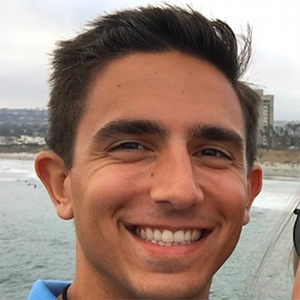
Assistant Research Professor
Joseph Gradone
Downloads
Research Interests
While I consider myself a physical oceanographer, I also consider myself a sort of “jack of all trades” rather than a “master of one”. Broadly, I am interested in utilizing my background in industry, science, and engineering to leverage and develop different ocean-observing technologies to solve problems of practical and societal importance. At the highest level, my research centers on understanding how the ocean transports important tracers (heat, salt, nutrients, etc.). I am fundamentally interested in how global warming may change ocean circulation, thereby impacting the transport of these tracers and the feedbacks that connect these processes. My present research is focused on understanding the processes mixing climatically important water masses in the Caribbean Through-Flow using Slocum gliders and targeted modeling experiments. This work is part of a National Science Foundation (NSF) project that I am a Co-PI on along with Travis Miles (Rutgers), Ruoying He (NS State), and Doug Wilson (UVI).
Short History
While I grew up in New Jersey, only 10 miles from campus, I have zig-zagged throughout the US for schooling, research experiences, and jobs. I received my Bachelor of Science degree in Geology from the University of Colorado Boulder in 2016 and my Master of Science degree in Oceanography from the University of Delaware under the direction of Dr. Matthew Oliver in 2018. My master’s research investigated the impacts of sea surface kinetic energy on phytoplankton blooms in the Southern Ocean through the use of remote sensing, ocean models, and biogeochemical Argo floats. From 2018 to 2020, I worked for Teledyne Webb Research on Cape Cod as a Slocum glider Customer Support Applications Engineer. From 2020 to 2024, I completed my PhD studying the circulation dynamics of the Caribbean Through-Flow under the supervision of Dr. Travis Miles. For my PhD research, I used a combination of Slocum gliders and ocean reanalysis output to investigate the volumetric transport and transformation of climatically important water masses that comprise the upper-limb of the Atlantic Meridional Overturning Circulation (AMOC) flowing through the Caribbean.
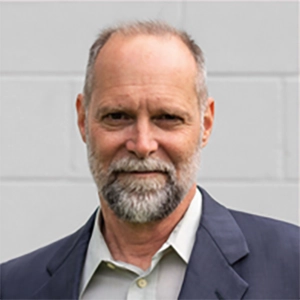
Director of RUMFS
Thomas Grothues
Downloads
Research Interests
I am interested in the abundance and distribution of fishes as responses to physical factors. These responses include those that could be considered involuntary, such as distribution of larvae by ocean currents and mortality or loss of reproductive capacity in unsuitable environments. Responses also include those that are voluntary (behavioral), such as migration, ranging, and sheltering (including burial). The physical factors that I investigate as impacts include natural and anthropogenic perturbations such as restoration efforts, urbanization of water fronts, seasonal and inter-annual water quality fluctuations and ocean structure. In the last 10 years I have worked extensively with adult and juvenile stages on movement, migration, and habitat choice. In doing so, I developed an interest in furthering technologies and strategies to meet the challenges of studying highly mobile fish in the ocean, including sablefish and salmon in deep Alaskan waters, sturgeon, flounder, and other sport fishes along the East and Gulf coasts of the US, and pelagic thresher sharks in the Visayan Sea, Philipinnes. The development of tools such as payload-controlled autonomous underwater vehicles for fish tracking and imaging, and related processing algorithms for sonar image classification and decision making, can be revealing but require understanding of natural history and behavior in order to be effective in implementation. These investigations are therefore truly cross-disciplinary and involve collaborations with other biologists, physical and geological oceanographers, commercial fishers, and mechanical, electrical, computer, and acoustical engineers, as well as interaction with Federal, State, municipal, and private-sector resource managers.
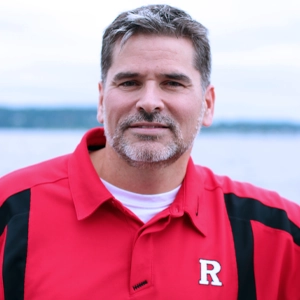
Professor
Josh Kohut
Downloads
Research Interests
Physical processes in the coastal ocean are highly variable in space and time and play a critical role in coupled biological and chemical processes. From events lasting several hours to days on through inter-annual and decadal scales, the variability in the fluid itself structures marine ecological systems. My approach is to apply ocean observing technologies that now sample across these important time and space scales to better understand the physical ocean that structures marine ecosystems. I am involved in many research and education programs that range in scope from storm intensity, offshore wind, and local water quality monitoring off the NJ coast; regional fisheries along the US east coast; and environmental studies of polar ecosystems in the coastal waters surrounding Antarctica. Consequently, this new knowledge has relevancy to broader stakeholder communities with interests in the coastal ocean. Working through partnerships across these stakeholder groups, my research is collaborative and supports both science and application. Through these partnerships I am able to frame relevant scientific hypotheses and efficiently translate the output to better management and monitoring.
Short History
Growing up in New Jersey, my interest in the physics of the ocean began along the shores of Barnegat Bay. After receiving my Bachelor’s degree in Physics at the College of Charleston in Charleston, SC, I returned to New Jersey and began my research career at Rutgers. Now I look forward to addressing new science and, working through partnerships, translating that science into applications that benefit the many stakeholders with interests in the coastal ocean.
Teaching Efforts
Oceanography House
Topics in Marine Science: Ocean Observing

Master of Operational Oceanography (MOO) Degree Program Director
Alex Lopez
Downloads
Research/Teaching Interests
My research interests include applications of regional ocean models to transport pathways and timescales, as well as simulating regional microplastic particle fate. My teaching interests include developing students into skilled researchers that exemplify lifelong learners, through critical thinking engagement, practical learning experiences, and presentation opportunities.
Short History
I received my B.S. in Physics from The College of New Jersey in 2010, then a Master of Arts in Teaching in 2011, also from The College of New Jersey. I received my Ph.D. from Rutgers, The State University of New Jersey in 2020, studying circulation timescales and transport pathways of the Mid-Atlantic Bight and Gulf of Maine using ROMS. I was a postdoctoral scholar at Pennsylvania State University, studying microplastic particle fate within Chesapeake Bay using modeling.
Teaching Efforts
16:712:505 Integrated Ocean Observing 1
16:712:506 Integrated Ocean Observing 2
16:712:507 Field Laboratory Methods 1
16:712:508 Field Laboratory Methods 2
16:712:509 Integrated Ocean Observing – Software Bootcamp
16:712:510 Operational Ocean Modeling & Data Visualization
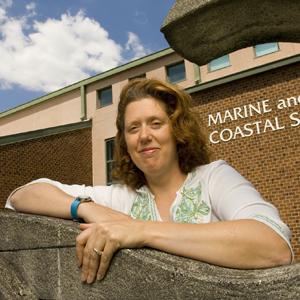
Associate Professor, Science Engineering Technology (SET) Agent
Janice McDonnell
Downloads
Research Interests
Janice is currently serving as the Science Engineering & Technology Agent for the department of 4-H Youth Development at Rutgers University where she supports county 4-H Agents in promoting STEM in their communities. She hosts a variety of on-campus programs designed to engage young people in Rutgers University science and engineering programs. In addition, Janice helps university faculty to develop innovative and effective broader impact statements in accordance with NSF’s Criterion II. Scientists and Engineers are engaged in a wide variety of education and outreach initiatives designed to educate the public about STEM disciplines. Janice works with scientists to translate their research into educational products that can be used by K-16 students, teachers and the general public. Finally, Janice is interested in program evaluation and works with a range of external collaborators to conduct a range of program assessments.
Short History
Janice served as the Director for the National Science Foundation’s Centers for Ocean Science Education Excellence Networked Ocean World (COSEE- NOW) 2002-2012, where the goal is to help scientists and educators work together to better understand and educate others about the ocean. Together with her colleagues and collaborators, she has developed a range of tools and professional development programs for both educators and scientists that help promote Ocean Literacy. More recently, Janice has been working on undergraduate education and promoting diversity in the ocean sciences.
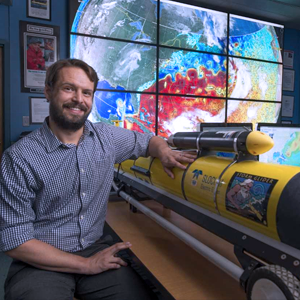
Associate Professor
Travis Miles
Downloads
Research Interests
I am a physical oceanographer interested in understanding how the atmosphere, cryosphere, earth, and ecosystems connect through the ocean across a broad range of temporal and spatial scales. To understand these connections I use and develop ocean observation networks that sample across spatial and temporal scales in combination with process oriented numerical modeling. I am involved with an array of multi-disciplinary projects that involve: 1) Rapid response Teledyne-Webb Slocum glider deployments ahead of coastal storms; 2) investigation of the ice-ocean interactions in the Amundsen Sea and 3) development of novel satellite products in support of wind resource estimates for coastal New Jersey.
Short History
I received my B.S. in Marine science and Meteorology from North Carolina State University (NCSU) in 2007. In 2009 I completed a Master’s in Physical Oceanography also at NCSU under the direction of Professor Ruoying He. I received my PhD from Rutgers University in 2014 studying sediment resuspension and transport during Nor’easters and Hurricanes, specifically Sandy in 2012. I am currently an Assistant Research Professor in the Rutgers University Center for Ocean Observing Leadership (RUCOOL).
Teaching Efforts
I currently co-teach Ocean Methods and Data Analysis, a hands on class that introduces undergraduates to oceanographic equipment and data processing techniques.
Associate Professor
Daphne Munroe
Downloads
Research Interests
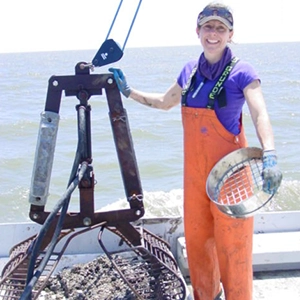
Increasing pressures on marine ecosystems, including climate change, resource exploitation, ocean acidification, and pollution threaten to create imbalances that will drive ecological change in the ocean. Sustainability of coastal and marine ecosystems, including both natural and social resilience, relies on understanding, predicting and adapting to these changes. To achieve sustainability we must first understand how ecosystems change: this is the motivation of my research. Larval dispersal dynamics and population connectivity are the primary vehicles for change in marine populations. The ways in which populations are connected determines how populations shift in response to climate or anthropological pressure, how evolution occurs, how effective restoration efforts can be, and how society can sustainably harvest marine resources. In my laboratory, I study these complex interactions using economically and ecologically important coastal invertebrate species.
Short History
I came to Rutgers from colder, more northern climes. The Canadian west coast, where I grew up, is also where I did my undergraduate and graduate training. I was fortunate to be awarded a JSPS postdoctoral fellowship that allowed me to conduct research in Northern Japan.
Teaching Efforts
Undergrad
11:628:125:90 Exploring the World’s Oceans
Byrne Seminar: Oysters Then and Now: Revolutionary Seafood Research at Rutgers
Graduate
co-teaching Ecosystem-Based Fishery Management Seminar
Select Publications
Munroe, D.M., Powell, E.N., Ford, S.E., Hofmann, E.E., Klinck, J.M. 2015. Consequences of asymmetric selection pressure and larval dispersal on the evolution of disease resistance: a metapopulation modeling study with oysters. Mar. Ecol. Prog. Ser. doi:10.3354/meps11349
Narváez, D., D. Munroe, E. Hofmann, J. Klinck, E. Powell, R. Mann, and E. Curchitser. 2015. Long-term dynamics in Atlantic surfclam (Spisula solidissima) populations: The role of bottom water temperature. J. Mar. Sys. 141: 136-148. http://dx.doi:10.1016/j.jmarsys.2014.08.007
Powell, E. N., J. M. Klinck, D. M. Munroe, E. E. Hofmann, P. Moreno, and R. Mann. 2015. The Value of Captains’ Behavioral Choices in the Success of the Surfclam (Spisula solidissima) Fishery on the U.S. Mid-Atlantic Coast: a Model Evaluation. J. Northw. Atl. Fish. Sci., 47: 1–27. http://journal.nafo.int/47/47.html
Zhang, P., Haidvogel, D., Powell, E., Klinck, J., Mann, R., Castruccio, F., Munroe, D. 2015. A coupled physical and biological model of larval connectivity in Atlantic surfclams along the Middle Atlantic Bight. Part I: Model development and description. Estuarine, Coastal and Shelf Sci. 153: 38-53. doi:10.1016/j.ecss.2014.11.033
Munroe, D, J M. Klinck, E E. Hofmann & E N. Powell 2014. A modelling study of the role of marine protected areas in metapopulation genetic connectivity in Delaware Bay oysters. Aquatic Conserv: Mar. Freshw. Ecosyst. 24: 645–666. DOI/10.1002/aqc.2400
Munroe, D., J. Klinck, E. Hofmann, and E.N. Powell. 2013. How do shellfisheries influence genetic connectivity in metapopulations? A modeling study examining the role of lower size limits in oyster fisheries. Canadian Journal of Fisheries and Aquatic Sciences, 70(12): 1813-1828,
Munroe, D.M., E.N. Powell, R. Mann, J.M. Klinck, and E.E. Hofmann. 2013. Underestimation of primary productivity on continental shelves: evidence from maximum size of extant surfclam (Spisula solidissima) populations. Fisheries Oceanography, 22: 220–233. doi: 10.1111/fog.12016.
Munroe, D., A. Tabatabai, I. Burt, D. Bushek, E. N.Powell & J. Wilkin. 2013. Oyster mortality in Delaware Bay: Impacts and recovery from Hurricane Irene and Tropical Storm Lee. Estuarine, Coastal and Shelf Science. 135:209-219. http://dx.doi.org/10.1016/j.ecss.2013.10.011.
Associate Professor
Grace Saba
Downloads
Research Interests
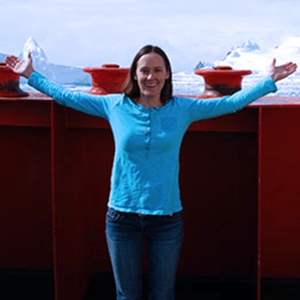
I initiate diverse, multidisciplinary projects in order to address both small-scale (individual organism) and large-scale (whole ecosystem) questions with ecological, physiological, and biogeochemical implications. My broad research interests are in the fields of coastal marine organismal ecology and physiology, with emphasis on how organisms interact with their environment (physical-biological coupling) and other organisms (food web dynamics and predator-prey interactions), how physiological processes impact biogeochemistry (nutrient cycling and carbon sequestration), and how climate change (i.e., ocean acidification, warming) impacts these processes. I apply multiple techniques and collaborate with physical/biological/chemical oceanographers and physiologists, molecular ecologists, fisheries scientists, ocean observers, and climate modelers. I employ an integrative, mechanistic approach and have strong laboratory and field components in my research.
Short History
I received my Bachelor of Science degree in Aquatic Biology in 2002 from the University of California Santa Barbara, then received my Ph.D. in Marine Science in 2010 from the College of William & Mary at the Virginia Institute of Marine Science. I was a post doctoral research associate at Rutgers University from 2010-2012, was promoted to Assistant Research Professor in 2012, and to tenure-track Assistant Professor in 2015.
Teaching Efforts
Fall 11:628:363 OCEANOGRAPHIC METHODS AND DATA ANALYSIS: BIOLOGY/CHEMISTRY (3 cr; Fridays 10:55-5:15)
Prerequisites: 11:628:320; Rutgers REHS Laboratory Safety Training
Description: This course focuses on basic techniques to collect, analyze, and report oceanographic and marine science data with emphasis on biological and chemical variables. This will include interactive lectures, team-based hands-on field sampling, laboratory sample analysis, writing and presenting results, and writing a scientific paper. Teamwork is required for this course. This course will require some travel as well as work outdoors, aboard research vessels, and in the laboratory with chemicals.
Fall 11:628:461/16:712:520 THE BIOLOGY OF LIVING IN THE OCEAN: WATER COLUMN ECOSYSTEMS & PROCESSES (3 cr; Mondays/Thursdays 12:35-1:55)
Prerequisites: 11:628:320, 1 term Calculus, 2 terms General Biology; Recommended: General Chemistry and Physics
Description: The ocean is the majority of Earth and the largest biome on the planet. Processes that occur in the water column are highly dynamic and central to regulating the planet’s biogeochemistry which influences how much oxygen we breath, how many fish exist, and how much oil is available to human’s to extract. This course will cover the processes that regulate the biology of the plankton and fish, which drives the community ecology for ocean ecosystems. This course covers ecological themes such as the acquisition and transformation of energy and materials, population regulation, competition/predation dynamics, population connectivity and marine food webs. The course will also highlight approaches and technologies used to make measurements in the ocean.
Fall/Spring 16:712:605, 606 OCEANOGRAPHY SEMINAR (1 cr; Tuesdays 10:55-12:15)
Prerequisites: 16:712:501, 520 or 522, 540.
Description: Scientific papers are read in order to foster discussion and critical analysis by students of important scientific topics. Papers are selected from all disciplines with an emphasis on interdisciplinary studies, typically with a specific theme each semester. Faculty instructors provide guidance and comment.
Spring 11:628:130 SEA MONSTERS AND WEIRD BIOLOGY IN EARTH’S OCEANS (3 cr; Mondays/Thursdays 12:35-1:55)
Prerequisites: None
Description: We live on an ocean planet. The ocean is full of giant sharks, mythic squids, gargantuan worms, and microbes that shape the planet. Biology is continually adapting and evolving, driven by the environment in which it lives. The ocean encompasses extremes in physical and chemical properties, which have produced weird and unique organisms that live in an environment unlike anything in our human experience. These organisms affect our lives. This class will use the ocean to explore how biology adapts and evolves. We will also explore how the ocean shaped our views of nature, assess how the ocean is changing, and consider how sustainable it will be in the future. Our goal is to increase the biological and ocean literacy of students. The course will be overseen by two faculty, but the course will also include lectures from leading Rutgers scientists who have spent their careers exploring biology in the ocean and will speak on their areas of specialization.
Associate Teaching Professor, Dept of Geography
Dan Barone
Short History
Dr. Barone is a jointly-appointed Associate Research Professor within the Rutgers University Department of Marine and Coastal Sciences (DMCS), Center for Advanced Infrastructure and Transportation (CAIT), and Department of Geography. He holds Bachelor’s and Master’s degrees in Marine Science and Instructional Technology from Stockton University and a PhD in Physical Geography from Rutgers University. Dr. Barone has over 15 years of experience addressing coastal resilience issues related to beach-dune storm vulnerability, maritime transportation, coastal floodplain mapping, and beneficial use of dredged material. He utilizes spatial data analysis, remote sensing, and coastal modeling techniques to solve complex coastal problems and present solutions to various audiences. Dr. Barone is also a Certified Floodplain Manager (CFM) and Geographic Information Systems Professional (GISP)
Professor
Robert Chant
Downloads
Research Interests
My main research focus is on the physics of estuarine and coastal systems. Specifically, my research utilizes observations, theory and modeling to advance our understanding of processes that control stratification, vertical mixing and dispersion because they are central in defining the physical and biogeochemical function of these environments. My interests and activities include both basic studies of the physics of these systems as well as addressing applied problems such as sediment and contaminant transport, effects of basin engineering on circulation and mixing and more recently how climate change and water shed activities may influence these systems in the future.
Short History
Grew up on Long Island’s south shore where I informally explored marine science as a amature sailor and professional clam digger. Earned an undergraduate degree in Electrical Engineering from SUNY Buffalo in 1985 and a PhD in Oceanography from SUNY Stony Brook in 1995. Began at Rutgers University as a Post-doctoral fellow in 1995 and where I am now a Professor in the Marine and Coastal Science Department.
Teaching Efforts
Undergraduate
Humans Interacting with the Coastal Ocean
Introduction to Physical Oceanography
Exploring New Jersey’s Water Ways (Byrne Seminar)
Geophysical Data Analysis
Graduate
Introduction to Physical Oceanography
Geophysical Data Analysis
Coastal and Estuarine Ocean Dynamics
Select Publications
Aristizábal, María, Robert Chant, 2013: A Numerical Study of Salt Fluxes in Delaware Bay Estuary. J. Phys. Oceanogr., 43, 1572–1588
Jurisa, JT, RJ Chant, 2013, Impact of offshore winds on a buoyant river plume system. Submitted to the Journal of Physical Oceanography, 43:2571:2587, DOI: 10.1175/JPO-D-12-0118.1
Chant. R.J D. Fugate and E Garvey, 2011, “The role of evolving dynamics and geomorphology in shaping an estuarine superfund site” Estuaries and Coasts 34: 90-105, DOI: 10.1007/s12237-010-9324-z
Chant R J, 2010, Estuarine Secondary Circulation. In Contemporary topics in estuarine physics and water quality. Cambridge University Press.
Chant, R. J., S. M. Glenn, E. Hunter, J. Kohut, R. F. Chen, R. W. Houghton, J. Bosch, and O. Schofield (2008), Bulge Formation of a Buoyant River Outflow, J. Geophys. Res., doi:10.1029/2007JC004100
Chant, R.J., W.R. Geyer, R.H Houghton, E. Hunter and J. Lerzcak (2007) “Estuarine boundary layer mixing processes: insights from dye experiments” Journal of Physical Oceanography Vol. 37 No 7 1859-1877
Chant, R. J. 2002. Secondary flows in a region of flow curvature: relationship with tidal forcing and river discharge. Journal of Geophysical Research. 10.1029/2001JC001082, 21 September.
Assistant Professor, Industrial & Systems Engineering
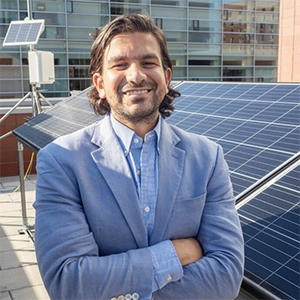
Ahmed Aziz Ezzat
Short Bio:
Dr. Ahmed Aziz Ezzat is an Assistant Professor of Industrial & Systems Engineering at Rutgers University, where he is a faculty affiliate of the Rutgers AI & Data Science (RAD) collaboratory, and the Rutgers Climate & Energy Institute (RCEI). Prior to joining Rutgers, he obtained his Ph.D. degree at Texas A&M University and his BSc. degree in Alexandria, Egypt, both in Industrial Engineering. Dr. Aziz Ezzat’s expertise is in the development of data science solutions (rooted in AI, ML, statistics, and operations research) for energy, environment, and industrial systems. His research has been funded by the U.S. National Science Foundation, Department of Energy, Department of Transportation, as well as state and industry sponsors, with a total funding of $5.21M (PI on $2.18M). His work has attracted substantial media attention, with coverage from ABC News, MarketWatch, Forbes, and the Asbury Park Press. Dr. Ezzat is frequently invited to present his research at international conferences and leading academic, industry, and government institutions, including a recent Congressional briefing on AI for Energy and the Environment.
At Rutgers, Dr. Aziz Ezzat has advised more than 40 mentees, from pre-college to post-docs, including six completed PhD and MSc. theses. His research has been recognized by the A. Walter Tyson Early Career award and the IIF-SAS® research methodology award, as well as with multiple best paper and poster awards at international conferences (along with his students and collaborators). His educational contributions have been recognized by teaching awards from three IISE divisions (Operations Research, Data Analytics, Quality & Reliability Engineering), as well as from INFORMS (JFIG Teaching Excellence Award). Dr. Aziz Ezzat has served as the 2023-2024 president of the IISE Energy Systems Division and is currently a council member at the INFORMS Quality, Statistics, and Reliability (QSR) Division, where he has introduced initiatives to advance the broader impacts of data and decision sciences, including the inaugural PG&E Energy Analytics challenge—a national-scale energy forecasting competition offered in collaboration with PG&E in 2024 and 2025. He is a senior member of INFORMS, and a professional member of IISE, IEEE, and IIF.
External Partner
- erick.fredj@gmail.com
- The Jerusalem College of Technology
Erick Fredj
Research Professor
Max Gorbunov
Research Interest
Biological oceanography, coral reefs, biophysics and physiology of photosynthesis, photoreceptors, benthic ecosystems, ocean optics, relationship between physical and biological processes in the ocean, global biogeochemical cycles, remote sensing
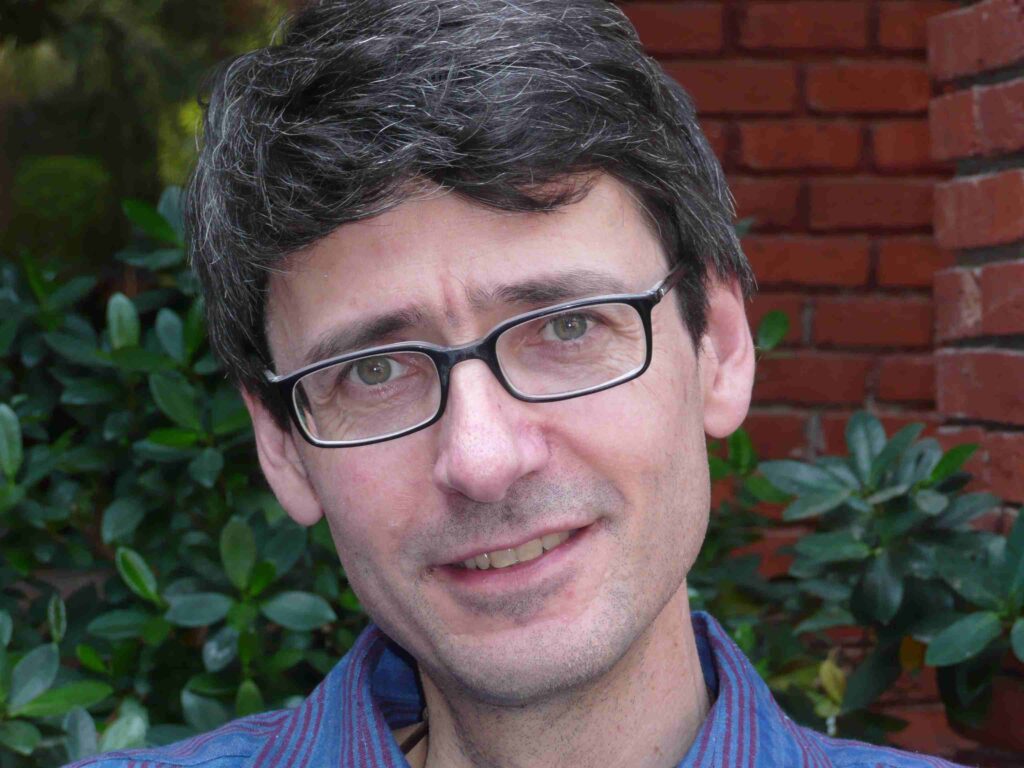
Professor, Department Chair, Dept of Computer Science
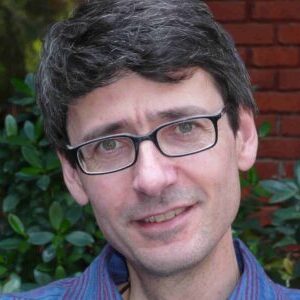
Ulrich (Uli) Kremer
Ulrich Kremer is a Professor in the Department of Computer Science. He graduated with highest distinction (ausgezeichnet) with a Diplom in Informatik from the University of Bonn, Germany. He went on to receive a M.S. and Ph.D. in Computer Science from Rice University under the supervision of Ken Kennedy .
His research interests include compilation techniques and interactive programming environments for multiprocessor systems, compiler support for power and energy management, programming models and optimizations for dynamic networks of resource constrained devices (e.g.: smart phones), and novel programming architectures for autonomous robots such as autonomous underwater vehicles.
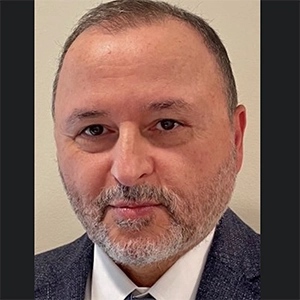
Director of the Center for Advanced Infrastructure & Transportation
Ali Maher
Ali Maher, PhD, F. ASCE, is the director of CAIT and a professor of civil and environmental engineering at Rutgers. Under his leadership, since 1998 CAIT has successfully competed to maintain its status as a USDOT-designated University Transportation Center (UTC), a network of internationally recognized research and education organizations that are a vital source for the professionals and leaders needed to meet our transportation needs now and in the future.
It was Maher’s vision to develop a center that would promote advancements in heavily utilized intermodal corridors and he was instrumental in forming a service network for members of the transportation infrastructure community at Rutgers.
Maher is a widely recognized expert, often tapped as a resource by industry and government agencies. His expertise spans the areas of ground improvement, soil dynamics, infrastructure asset management, nondestructive testing, environmental geotechnology, and new technology vehicles. Maher’s research has been funded by the National Science Foundation, USDOT, NJDOT, FHWA, DOE, U.S. Army Corps of Engineers, and other federal sponsors. Since CAIT’s inception, Maher has brought in more than $100 million of external research and technology transfer projects.
Maher has been a pioneer in promoting collaboration and building partnerships with other universities and public and private stakeholders to address our country’s most pressing transportation challenges. The $40.5 million FHWA Long-Term Bridge Performance (LTBP) program, which aims to improve bridge asset management, is just one example of such partnerships. Maher has been P.I. of LTBP since the project was competitively awarded to CAIT in 2008.
He is actively involved in a number of ASCE, ASTM, and International Society for Structural Health Monitoring of Intelligent Infrastructure (ISHMII) committees. Maher serves as president of the U.S. Universities Council on Geotechnical Education and Research. He is a member of the editorial board of ASTM Geotechnical Testing Journal. He also received the TRB Executive Committee’s K.B. Woods Best Paper Award in 2008 and 2011.
Maher is a graduate of the University of Michigan, where he received a B.S., M.S. and Ph.D. in 1978, 1983 and 1988 respectively.
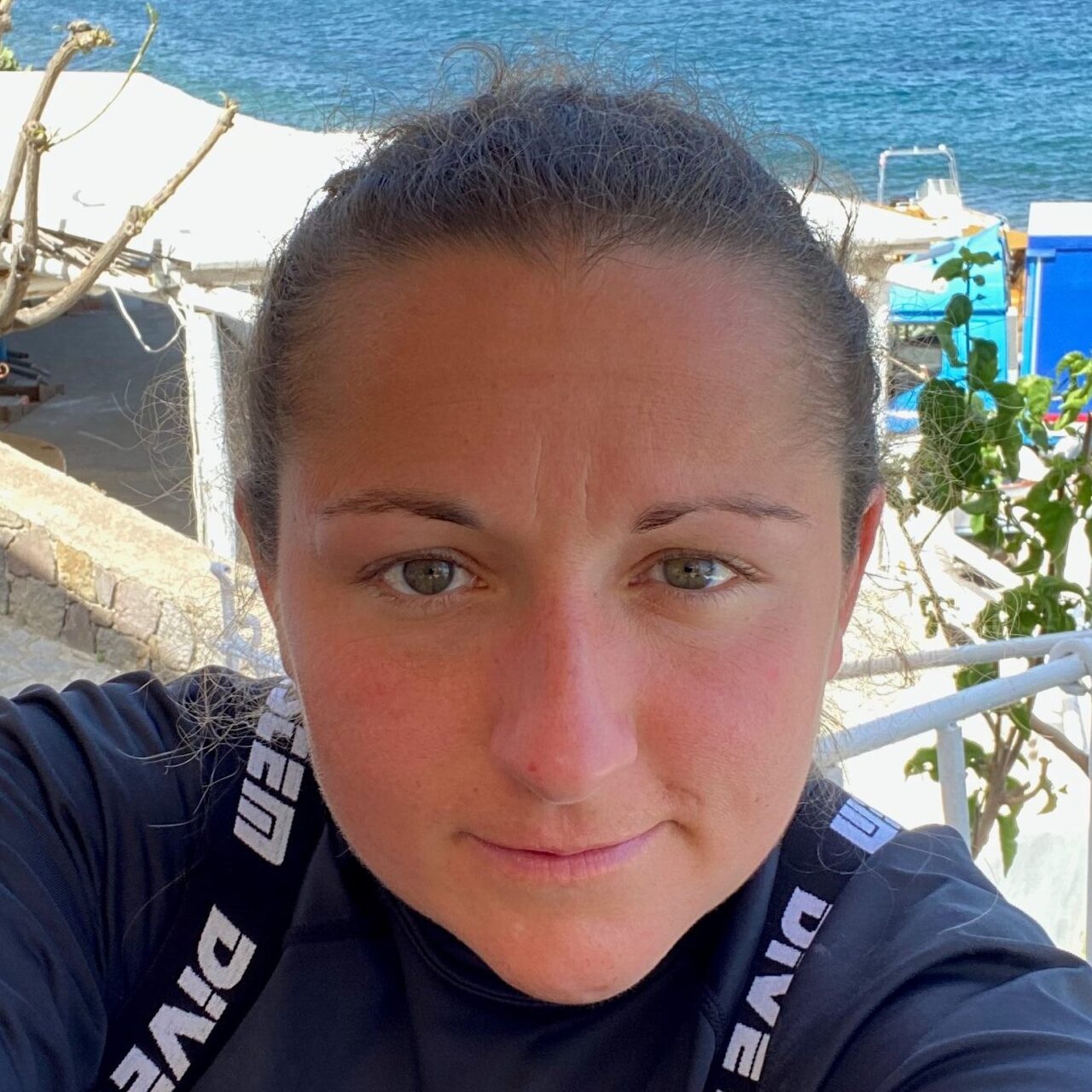

Assistant Professor
Fiorella Prada
Research Interests
My research focuses on how marine calcifying organisms, like corals and mollusks, build their biomineralized structures and how this process is influenced by shifting ocean conditions. I study these processes by integrating material science, molecular, and physiological approaches to identify mechanisms underlying coral resilience and persistence in extreme environments (e.g., CO2 vents, deep-sea, upwelling systems).
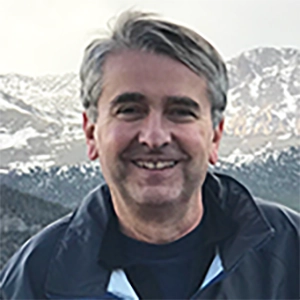
Distinguished Professor
David Robinson
Research Interests:
I am an earth scientist, more specifically a physical geographer and climatologist. My research interests run the spatial gamut from global to local, with an underlying theme being the development of a better understanding of the climate system. The majority of my published research has focused on hemispheric and regional snow cover dynamics and interactions of snow cover with other climate elements. This includes maintaining an internationally-recognized database of Northern Hemisphere snow extent throughout the satellite era http://snowcover.org. This information is used in our Global Snow Lab’s research endeavors, efforts of others, and in our contributions to national and international climate assessments.
As the New Jersey State Climatologist, I conduct research of an applied nature that focuses on the diverse weather and climate of the Garden State. This includes topics such as climate change, drought, flooding, and issues involving agriculture, transportation, public safety and commerce http://njclimate.org. The Office of the NJ State Climatologist also operates one of the most spatially dense observing networks in the nation. The NJ Weather and Climate Network http://njwx.org provides timely information to decision makers, the research community, and the general public.Finally, I have served on a number of national committees and occasionally publish on issues related to my interest in the collection and archiving of accurate climatic data.
Assistant Professor
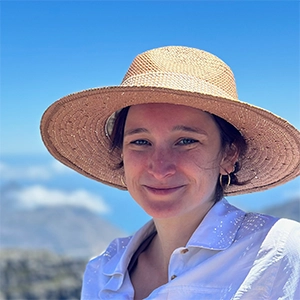
Corday Selden
RESEARCH INTERESTS
Microbes mediate the flow of energy and matter through the Earth system. In the ocean, diverse microbial communities repartition key elements (and their isotopes) among different chemical phases, altering the fate and fluxes of this material. In so doing, these tiny wonders profoundly influence Earth’s geochemical cycles and climate, shaping planetary habitability.
My research group, the Rutgers Marine Biogeochemistry Lab (RUMBL), investigates feedbacks between ocean chemistry and microbial metabolism that affect Earth system stability. Our work focuses on
(1) how microbes reshape nutrient landscapes in response to (climate-driven) shifts in ocean chemistry/physics (biogeochemical feedbacks), and
(2) how these changes affect distribution of carbon in Earth’s reservoirs (climate feedbacks).
Wedding field-based observations, laboratory experiments, and computational methods, our analytical toolkit includes elemental and stable isotope analyses (nitrogen, carbon, and bioactive transition metals) and ‘omics approaches.
Distinguished Professor
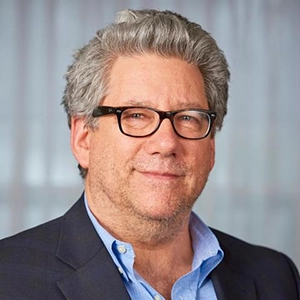
James Simon
James Simon serves as principal investigator (with Rutgers’ Daniel Hoffman as co-PI) on a USAID program linking horticulture and African indigenous vegetables (AIVs), in South African Development Community countries, to income-generation for rural populations and improvement of nutrition by increasing consumption of AIVs.
Simon also works in other African countries on botanicals for the same intended outcomes and on developing new urban sac gardens to improve access and availability to fresh AIVs in slums in Nairobi and Eldoret, Kenya. Simon, Hoffman (as PI), and others are working on a Rutgers Busch grant linking direct consumption of authenticated and iron-rich amaranth to improved human nutrition in a pilot clinical setting in Kenya.
Simon has invented and is focused on identifying natural bioactive insect repellents (against mosquitoes, ticks, and other animal and insect pests) to be as effective as DEET, and he has led major programs in income-generation for small holder farmers as a means to feed themselves.
His work takes place in Ghana, Kenya, Liberia, Rwanda, Tanzania, and Zambia


County Extension Dept. Head and 4-H Agent II (Eqv. to Assoc. Professor)
Marissa Staffen
Assistant Research Professor
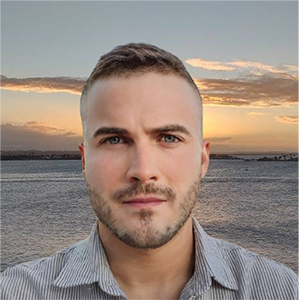
Fernando Pareja Roman
Research Interests
I am a physical oceanographer with a background in engineering and meteorology. I am interested in coastal ocean dynamics and air-sea interaction (marine meteorology), mainly based on coupled numerical models of weather, ocean circulation, and waves. I enjoy applying fundamental principles of fluid mechanics to address problems that have a strong anthropogenic component such as infrastructure and clean energy development. At RUCOOL, I study the impact of offshore wind farms in the structure of oceanic and atmospheric boundary layers.
Short History
I grew up in the Caribbean, in Cartagena, Colombia, which set me up for a life around the ocean. I received my B.S. in Environmental Engineering at Universidad de los Andes, a M.S. in Marine Meteorology at Universidad Nacional de Colombia, and a Ph.D. in Physical Oceanography at Rutgers University. In between programs, I was a visiting scientist in Geophysical Fluid Dynamics at CICESE, Mexico, and at the Russian State Hydromet University in St. Petersburg, Russia. I worked as a postdoc in Ocean Engineering at Stevens Institute of Technology, and in Ocean Dynamics at Rutgers. I joined RUCOOL in fall 2021.
Professor
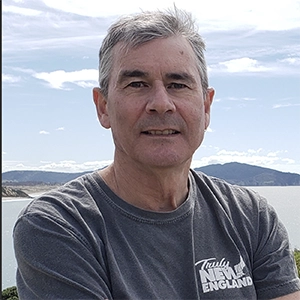
John Wilkin
Research Interests
- High-resolution regional modeling of the coastal ocean for applications related to coupled physical/ecosystem/bio-optical processes, including analysis and evaluation using satellite and in situ observations
- Real-time ocean forecast system development
- Applications of satellite radar altimetry in coastal regions
- Variational methods for assimilating coastal observing system data in models, and observing system design
- High resolution nested modeling of interactions between estuary, shelf sea and deep ocean circulation
- Estuary and coastal ocean carbon and nitrogen cycling
- Coastal ocean air-sea interaction, waves, and sediment transport
Short History
John Wilkin has 25 years of international experience (U.S., Australia and New Zealand) developing and applying model-based analysis systems for interdisciplinary research (nutrient and carbon cycling; larval dispersal; ocean forecasting) in coastal and adjacent shelf and boundary current waters. Most recently, these projects emphasize using variational methods for assimilation of in situ and remotely sensed observations and the design of observing networks. He is a developer of the Regional Ocean Modeling System (ROMS) and co-convenes the annual ROMS User Workshops.
Wilkin is a member of NASA’s Ocean Surface Topography Science Team (OSTST) and is active in promoting uses of radar altimetry in the coastal ocean. He represents OSTST on the Global Ocean Data Assimilation Experiment (GODAE) Science Team (GOVST). Wilkin also co-chairs the User Working Group for NASA’s Physical Oceanography Distributed Active Archive Center (PO-DAAC), and is a member of the Ocean Observing panel for Physics and Climate (OOPC) of the Global Ocean Observing System (GOOS).
Assistant Professor
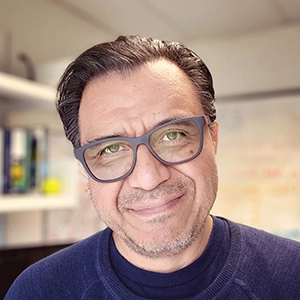
Javier Zavala-Garay
Research Interests
- Predictability of dynamical systems
- High-resolution regional modeling and data assimilation
- Use of variational methods for the study of ocean sensitivity, ensemble prediction, and data assimilation in ocean models.
- Real-time ocean forecasting
- Coupled ocean-atmosphere models
- ENSO prediction and predictability
Short History
I graduated from the University of Colorado at Boulder under the advise of Drs. Andrew M. Moore and Peter Webster, defending the thesis “ENSO Prediction and Predictability”. Since then, I have been mostly interested in understanding why dynamical systems, such as the ocean or the coupled ocean-atmosphere systems, are sometimes more predictable than others. I use numerical models, observations, and the principles of variational calculus to gain a deeper understudying of why this is the case. As a natural extension to this driving question, I also have developed and applied practical methodologies to improve ocean prediction using numerical models and data-assimilation.
Agriculture & Natural Resources County Agent II (Eqv. to Assoc. Professor)
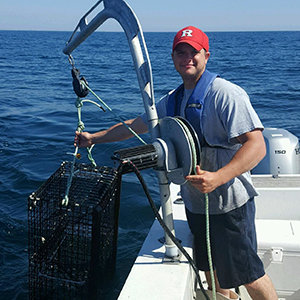
Doug Zemeckis
Research Project Manager
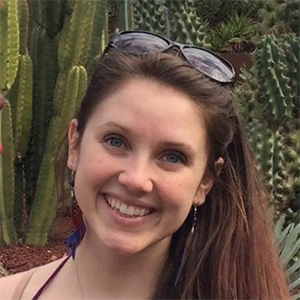
Kaycee Coleman
Research Interests
Kaycee Coleman is a Research Project Manager at RUCOOL. She holds a M.S. in Oceanography and has over a decade of experience in scientific analyses, data management, project management and creating and maintaining relationships with various stakeholders. At RUCOOL, her goal is to support center members and ease their project and center management workloads. Coleman also leads the Department of Marine and Coastal Science’s Vessel Oversight Committee and has a wealth of knowledge in health, safety, and environmental permitting and regulations especially in regard to Offshore Wind Fisheries Monitoring and Oceanography Plans. Previously in her career, she has worked for the U.S. Fish and Wildlife Service managing the Northwest Atlantic Seabird Catalog, most notably on a project with NOAA and BOEM to inform offshore wind development. She has also worked for the Oyster Recovery Partnership where she led the development and training for Maryland’s electronic harvest reporting program for charter, crab, finfish, and oyster harvest as well as managed the dockside monitoring program to verify harvest.
For an up-to-date CV, please visit ResearchGate.
Technical Director: RUCOOL & MARACOOS
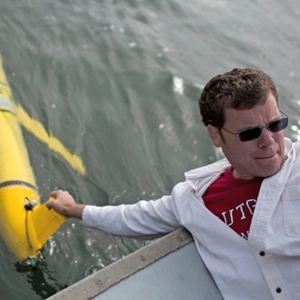
Mike Crowley
Downloads
Research Interests
Michael is the Technical Director for the Rutgers University Center for Ocean Observing Leadership (RUCOOL) and the Mid-Atlantic Regional Association Coastal Ocean Observing System (MARACOOS). His RUCOOL work includes: management of operations the entire COOL Lab, ensuring continuous quality data delivery from RUCOOL, and heading up the external communications for the RUCOOL Team including oversight of our website.
Michael is also the Technical Director for the U.S. Integrated Ocean Observing System (IOOS) MARACOOS. Michael oversees all aspects of data collection within the Mid-Atlantic Bight (Cape Hatteras to Cape Cod). MARACOOS collects data primarily from satellites, HF-RADAR and underwater ocean gliders. Data from all the instrumentation is used to feed and test ocean forecast models, with the ultimate goal being to better enable scientists to forecast both the ocean and atmospheric weather for the greater good of the Mid-Atlantic region. All of the data and much more can be viewed at oceansmap.maracoos.org.
Short History
1991 B.A. Geography, Rutgers University, New Brunswick, New Jersey.
1993 M.S. Geography/Oceanography, Rutgers University, New Brunswick New Jersey.
Glider Technician and Operator
David Aragon
Research Interests
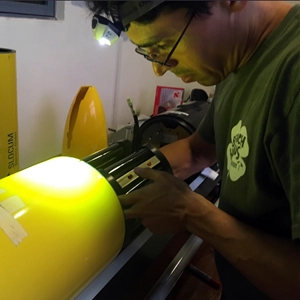
David Aragon serves as the primary engineer and pilot for RUCOOL’s Slocum underwater glider operations. For two decades David has been a lead in the field of underwater gliders, working closely with faculty to achieve research goals as well as industry to elevate the technology. In sharing this technology, David has been lead instructor for over 15 different week-long glider instruction courses targeting undergraduates, industry, and researchers. Assisting faculty and mentoring undergraduates in the production of numerous research projects and IEEE papers.
Prior to utilizing underwater robots for ocean research, David studied Electrical Engineering with a focus on computer engineering achieving a B.S. with honors from Rutgers University School of Engineering. During undergraduate focus was placed on robotics and computer vision utilizing C++ and MATLAB.
David has been placed in a variety of operational regimes and has been lead in spreading operational labs and knowledge to recipients such as University of Sao Paolo, Bermuda Institute of Marine Sciences, and several other research organizations. Successes such as the lead engineer for the first trans-Atlantic crossing of an ocean robot have become commonplace in the lab and in the field. Rutgers University Center for Ocean Observing Leadership’s success in the field of ocean robotics is a direct result of David’s commitment and experience.
Technician
Andre Ascura
Short Bio:
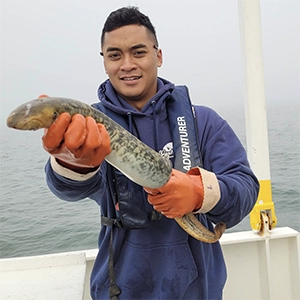
Andre joined the lab back in 2022 shortly after graduating from Rutgers University with a bachelor’s degree in marine biology. He supports applied fisheries research and long-term monitoring projects within the lab. He is interested in the application of non-extractive optical survey methods to better compliment current fisheries monitoring efforts for the Mid-Atlantic/Northeast region. Starting Fall 2025, he will be enrolled in the Ecology and Evolution Ph.D. program at Rutgers University.

(Co-PI) Fisheries Researcher
Sarah Borsetti
Short Bio:
Sarah Borsetti is a Fisheries Researcher at the Haskin Shellfish Research Laboratory, where she conducts applied research to support the commercial and recreational fishing industries in New Jersey and across the Northeast and Mid-Atlantic regions. Her work focuses on understanding the interactions between fished stocks’ population dynamics and the environment. Borsetti is involved in initiatives related to offshore wind energy and fisheries, working with multidisciplinary teams to examine potential ecological and economic consequences of offshore wind development on commercial and recreational fisheries.
Borsetti is also working with regional partners to equip commercial fishers with low-cost environmental sensors that attach to fishing gear to collect bottom-temperature data, water-column temperature profiles, and dissolved-oxygen data from fishing grounds. She co-leads Rutgers University’s Fish Tagging Research and Education Program (FiTREP). This volunteer-driven pilot initiative brings together recreational anglers to study the movement, migration, and connectivity of summer flounder using fish tags. Borsetti holds a Ph.D. in Ecology and Evolution from Rutgers University. She contributes to RUCOOL's mission by using ocean observing data to support a multidisciplinary understanding of marine fisheries.
Glider Technician | Master of Operational Oceanography
Brian Buckingham
Short Bio:
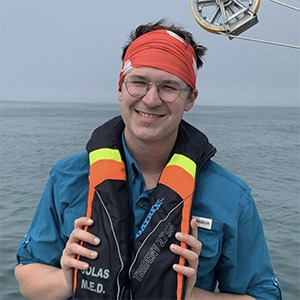
Brian Buckingham is a skilled Glider Technician with over 6 years of working with autonomous vehicles/performing oceanographic fieldwork. He received his B.S. from Texas A&M University and is currently working on his M.S. as part of the MOO program to advance his skillset. Brian assists in teaching glider camp, as well as prepares gliders and other oceanographic equipment, pilots gliders, and leads field expeditions for several projects. He is a GIS analyst and is advancing his programming skills analyzing mooring data through the MOO program. Furthermore, he is certified in hazardous materials (HAZMAT) shipping to assist in logistics of shipping research equipment for projects outside of the state of New Jersey.

Laboratory Researcher
Julia Engdahl
Short History
Julia Engdahl is a Programmer and Data Analyst at the RUCOOL, where she specializes in the intersection of physical oceanography and data science. She holds a B.S. in Directed Marine Studies and Fisheries (2019) from Rutgers University, where she also graduated as a member of the first MOO cohort in 2020. Her research roots lie in biological oceanography; her undergraduate work investigated the arrival of American shad and river herring in relation to physical water properties. This work evolved during her master’s studies, where she developed automated analyses of fish migration using computer vision algorithms such as artificial intelligence and machine learning.
Following her graduate work, Julia served as a federal contractor supporting NOAA’s Center for Operational Oceanographic Products and Services (CO-OPS). Transitioning from an Oceanographic Data Specialist to a Physical Oceanographer, she utilized her expertise to generate historical high tide flooding statistics and the annual High Tide Flooding Outlook, disseminating critical frequency predictions to the public. Her contributions to the agency, which included creating interactive visualizations for sea level trends, earned her multiple Director’s Awards for Leadership and Professional Excellence.
Since returning to Rutgers as Research Staff in 2022, Julia initially led the implementation of real-time onboard processing for glider acoustic data. Currently, her work focuses on physical oceanographic processes affected by offshore wind and storm events. She develops specialized code to execute large-scale spatial and temporal data pulls, synthesizing extensive glider and model data to understand ocean mixing during extreme weather events and assess risks such as glider-turbine interactions. In addition to her research, she remains an active educator and mentor, organizing internal workshops and assisting students with their computational needs.
Laboratory Researcher
Lori Garzio
Downloads
Research Interests
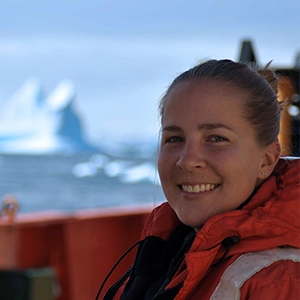
I am the Laboratory Manager for the Saba Laboratory, which is part of the Center for Ocean Observing Leadership (COOL). My broad research interests include the long-term impacts of climate change on marine ecosystems and the ocean’s role in the global carbon cycle, particularly at high latitudes. I am specifically interested in the biological component of the carbon cycle, such as the spatial and temporal variability of primary production, how primary productivity is influenced by top-down and bottom-up processes, and the role of zooplankton in biogeochemical cycling and sequestration of carbon. In addition to my biological oceanography research interests, I also enjoy developing software programs (using Python) for data maintenance and quality control.
Short History
I received my M.S. in Marine Science in 2012 from the College of William & Mary at the Virginia Institute of Marine Science. For my thesis research, I investigated the microzooplankton community structure and grazing impact along the Western Antarctic Peninsula as part of the Palmer Antarctica Long-Term Ecological Research (PAL LTER) project. I went on to work as a data analyst in the pharmaceutical industry for several years where I gained experience in database management and data visualization before returning to my passion for oceanography research as part of the Center for Ocean Observing Leadership (COOL). From 2015 – 2018, I was part of the Data Evaluation team at Rutgers for the Ocean Observatories Initiative (OOI) where we assisted with the testing, deployment, and maintenance of the OOI Cyberinfrastructure system for data delivery to public users. I am now involved in various projects for the COOL group, including data analysis and visualization for wind energy assessment projects; real-time and delayed-mode glider data processing, QA/QC, analysis and visualization; and field and laboratory work for zooplankton ecology projects.
Select Publications
Steinberg DK, Ruck KE, Gleiber MR, Garzio LM, Cope JS, Bernard KS, Stammerjohn SE, Schofield OM, Quetin LB, Ross RM. 2015. Long-term (1993 – 2013) changes in macrozooplankton off the Western Antarctic Peninsula. Deep-Sea Research Part I 101:54-70.
Garzio LM, Steinberg DK, Erickson M, and HW Ducklow. 2013. Microzooplankton grazing along the Western Antarctic Peninsula. Aquatic Microbial Ecology 70:215-232.
Garzio LM, and DK Steinberg. 2013. Microzooplankton community structure along the Western Antarctic Peninsula. Deep-Sea Research Part I 77:36-49.
Sailley SF, Ducklow HW, Moeller HV, Fraser W, Schofield OM, Steinberg DK, Garzio LM, and SC Doney. 2013. Carbon fluxes and pelagic ecosystem dynamics near two western Antarctic Peninsula Adélie penguin colonies: an inverse model approach. Marine Ecology Progress Series, 492: 253-272.
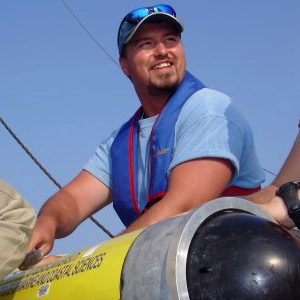
Glider technician, Marine hardware, Captain
Chip Haldeman
Research Interests
The physical aspects tend to pique my interest the most – waves, currents, tides, and the motion of the ocean. Specific interests include the physical coupling of the ocean and atmosphere, and the effects that the ocean has on weather. I’ve spent a large part of my career collecting and analyzing glider data in an attempt to provide more data for models to assimilate, hoping to significantly improve forecasting. I do, however, find smaller scale phenomena just as interesting – a tidal jet approaching an ideal laminar flow showing up in the ADCP data we’re collecting will have me as excited as a kid in a candy store.
Short History
Whether it’s work or play, the ocean is my forte. Growing up in NJ I spent a lot of time on the ocean, but going to school in New Mexico, I had a very limited view of what oceanography actually was. Attending Rutgers broadened my horizons significantly, and I joined COOL as an undergrad. Bringing with me a significant set of hands-on skills and seamanship, I filled a specific niche and was able to forge a path all my own that has blossomed into an incredible career. From building and designing moored instrumentation arrays, to CODAR technician, to glider pilot and technician, to scientific research diver, and now research vessel captain, it has all been very fulfilling. I am a Rutgers “lifer”, and I now enjoy imparting that knowledge to the next crop of scientists and technicians that come through RUCOOL.
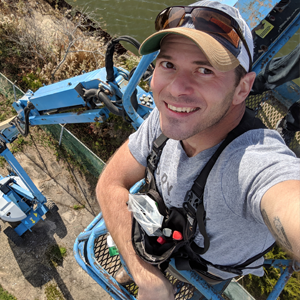
Research Project Coordinator II
Ethan Handel
Downloads
Research Interests
I am a research project coordinator with RUCOOL, and I primarily specialize in operational oceanography. Specifically, I have been working to support NOAA’s IOOS program as the lead HF-radar operator for the Mid-Atlantic region. I am responsible for the installations, operations, maintenance, and enhancement of 20 different coastal research stations. My time is divided between working on science and engineering data analysis, collection, and aggregation, from RUCOOL’s operations center at Rutgers University and conducting fieldwork at the shore. I help assist faculty, post-docs, grad students, and undergrads who need to work with the data collected by our HF-radar systems. This data is used to make near-real-time maps of the coastal ocean surface currents, which gets used to help improve the U.S Coast Guard’s Search and Rescue operations.
Short History
I graduated from Rutgers University in 2008 with a degree in Applied Ecology and Natural Resources Management. Having spent time as an undergraduate assisting the RUCOOL group in a variety of roles, I began working full-time with RUCOOL after completing my Bachelors program.
Field Technician
Douglas Hood
Short Bio:
Douglas Hood is a marine ecology technician at Rutgers University Marine Field Station. He assists with work on coastal ecology, long term monitoring, and fisheries research. His recent work involves AI that classifies microhabitat mosaics using side scan sonar from the REMUS AUV, which is then overlaid with trawl catches. The goal of this project is to provide a better understanding of small-scale habitat use of benthic fish off New Jersey's coast. He is a graduate from Stockton University with a B.S. in Marine Biology.
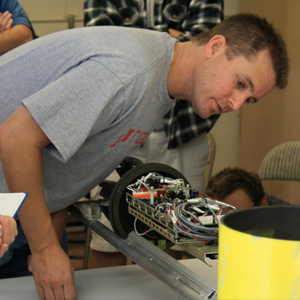
Lead Software Developer
John Kerfoot
Short Bio:
John Kerfoot is a software engineer, data analyst and systems programmer with 25 years of experience supporting oceanographic data systems and research initiatives at Rutgers. With a M.S. in Biological Oceanography and a Bachelor’s in Aquatic Biology from the University of California, Santa Barbara, John has built a career centered on the integration, processing, and distribution of complex environmental data. John played a key role in national and international ocean data efforts, including contributing to the development of NetCDF standards and managing data infrastructure such as THREDDS and ERDDAP servers. His work involves collaborating with regional data providers, ensuring data compliance, and supporting large-scale initiatives like the Ocean Observatories Initiative and MARACOOS by transforming distributed datasets into accessible, visualization-ready formats.
His technical expertise spans scientific programming, data services, and web-based tools, enabling advanced analysis and real-time comparison of ocean models with observational data. John has designed workflows and scripts to merge satellite-derived sea surface temperature products and support atmospheric modeling applications, as well as conducted analysis of high-frequency radar data to generate surface current fields. Proficient across Linux, macOS, and Windows environments, he brings strong skills in Python, MATLAB, Perl, database management, and modern web technologies. John’s experience with geospatial data systems, version control, and ocean data access protocols underscores a deep capability in building scalable, user-focused data solutions for scientific and operational communities.
Web Design, Programmer, Education
Sage Lichtenwalner
Short History
Sage is a research programmer and user experience (UX) designer with Rutgers University’s Center for Ocean Observing Leadership (RU COOL). His work focuses on developing interactive websites and data tools that support researchers, students, and faculty.
Since 2022, he has served as Information Manager for the Palmer Antarctica Long‑Term Ecological Research (LTER) program, where he oversees data archiving workflows, quality control, and metadata curation. He has been a Co‑PI on six NSF grants across four directorates, contributing to projects that support undergraduate use of ocean data (OOI Data Labs), promote polar literacy in informal learning environments (Polar Literacy), and develop tools to support Broader Impacts planning (ARIS Center). As Co‑PI of the new NSF‑funded EMBARK CyberTraining project, he leads the development of short‑format, hands‑on training for Early Career Ocean Professionals focused on reusing data from major facilities and repositories.
Over more than two decades, he has designed and developed a wide range of database‑driven web applications, data visualizations, and learning resources, including an early online community network for COSEE NOW, an internal review portal for the OOI Data Team, and real‑time ocean data processing from satellites, HF radar, and gliders. He holds a B.S. in Physics and an M.B.S. in User Experience Design from Rutgers University.
Research Program Coordinator
Delphine Mossman
Downloads
Research Interests
My research interests are multidisciplinary and manyfold. With the work I am doing with RUCOOL, I am interested in the effectiveness of glider-mounted echosounders as a supplement or even a replacement to conventional vessel-based zooplankton sampling, and anthropogenic impact on the ocean. I am also interested in cetacean communication and conservation, and the impact of noise pollution on ocean ecosystems.
Short History
I have harbored an intense love of and fascination with the ocean for as long as I can remember, fueled mainly by summer camps and trips to the shores of Stone Harbor, NJ. To that end, I attended Stony Brook University on Long Island for my undergraduate years and received bachelor’s degrees in Marine Vertebrate Biology and Applied Math & Statistics. Just prior to graduating, I exchanged emails with Dr. Kim Davies of the University of New Brunswick, and we agreed that her research on a glider-mounted echosounder was the perfect fit for my graduate-level research interests. I received with my MSc in Biology in August of 2022, and am now working full-time for Rutgers University on glider-echosounder evaluation projects.

Data Analyst and Programmer
Laura Nazzaro
Downloads
Research Interests
Laura Nazzaro currently manages Dr. Kohut’s Dynamic Marine Ecology Lab. Under Dr. Kohut’s supervision, she earned her M.S. in Oceanography in 2011 with a thesis focused on modeling ecological interactions between regional fisheries datasets and the oceanographic datasets measured by RUCOOL. After completing her degree she has continued serving RUCOOL on a variety of projects, including many centered around ecological modeling, as well as in daily data operations. She is experienced in Python, MATLAB, R, and shell scripting and has played a key role in the development and maintenance of data processing, quality control, analysis and visualization for Slocum glider, HF radar, and satellite data collected by RUCOOL and its partners. In her role as lab manager, she continues many of these same duties, with particular focus on dynamic habitat modeling of a variety of animals from fishes to large marine mammals. As part of this role, she is also an additional support for RUCOOL students, especially those supervised by Dr. Kohut, and provides support for proposals, reports, publications, and presentations led or co-led by Dr. Kohut and other RUCOOL faculty. Her ecological research stresses the importance of strong collaboration, often involving a wide variety of collaborators from different universities and different disciplines as well as stakeholders ranging from the fishing industry to the wind industry. It also highlights the importance of research that can be directly applied to a dynamic ecosystem in ways that support the variety of stakeholders living and working in a highly dynamic region experiencing a growing number of ocean uses, and has been used to improve fisheries management and conservation of the critically endangered North Atlantic right whale.

Laboratory Researcher
Joey O’Brien
Short Bio:
Joey O’Brien is a laboratory researcher at the Haskin Shellfish Research lab where he assists in field research related to fisheries management, stock assessments, coastal ecology, aquaculture, and offshore development. After graduating from Towson University in 2017 with a Bachelor’s in Biology and minors in Chemistry and Molecular Biology he went to work as a fisheries observer in the Alaska Observer program. In 2019, he left the observer program and began working at HSRL as a seasonal field technician, contributing to projects focused on the Delaware Bay oyster fishery and shoreline restoration. After his seasonal position ended, he worked as an intern at the Dauphin Island Sea Laboratory in the Fisheries Ecology lab working on projects related to the red snapper fisheries management plan. Once the internship ended, he made his way back to HSRL where he worked on projects related to shellfish aquaculture before settling in as a long term technician examining impacts of offshore wind development on fisheries resources off the coast of New Jersey.
Director of CODAR
Hugh Roarty
Downloads
Research Interests
Hugh Roarty is a Research Project Manager at RUCOOL, with more than two decades of experience advancing coastal and ocean observing systems from research concepts to sustained operational capabilities. Trained as an ocean engineer, he has played a central role in the design, deployment, and operation of high-frequency (HF) radar networks, autonomous platforms, and in situ sensors supporting coastal oceanography, maritime safety, and national observing infrastructure. His work bridges engineering, applied science, and operations, with a sustained focus on translating observational data into actionable products for stakeholders including NOAA, the U.S. Coast Guard, and DARPA.
Over the course of his career, Dr. Roarty has won nearly $10M in research funding, authored or co-authored close to 100 peer-reviewed publications, and delivered more than 200 technical presentations. He is widely recognized for his leadership in HF radar science, including vessel detection, wave and current measurement, quality assurance/quality control, bistatic radar systems, and network resilience—work that has directly informed search and rescue operations, offshore wind planning, and coastal hazard response. In addition to his research contributions, he has held faculty appointments at Princeton, mentored students and early-career scientists, and helped shape best practices and standards for regional, national, and global ocean observing networks.
Lab Manager
Ailey Sheehan
Short Bio:
Ailey Sheehan is a laboratory researcher at the Haskin Shellfish Research Laboratory, where she assists in research relating to shellfish fisheries and aquaculture. She earned a B.S. in Marine Science with a minor in Fisheries Science, and a M.S. in Operational Oceanography from Rutgers University. Currently, she is working directly with the surfclam and ocean quahog fishery to develop a data collection and reporting protocol that will support a regulatory transition in current legislation to allow vessels within the fishery to land both species simultaneously.
Data Analyst and Programmer
Michael Smith
Downloads
Research Interests
Michael Smith is a Research Analyst at RUCOOL, where he has worked since 2010. He holds a B.A. in Biological Sciences and a M.S. in Data Analytics. His work focuses on evaluating the performance of global and regional ocean circulation models by comparing model output to in situ observations, including high-frequency (HF) radar-derived surface currents and autonomous underwater glider profiles. These comparisons help improve the accuracy of operational ocean forecasts and hurricane prediction systems.
Michael manages the real-time quality control, processing, and visualization of surface current data collected by CODAR SeaSonde HF radar networks in the Mid-Atlantic, Gulf of Mexico, Caribbean, and Antarctic regions. He is the lead developer of HFRadarPy, an open-source Python toolbox that automates HF radar data validation and conversion to widely used formats such as NetCDF, MySQL, and LLUV. His work supports national and international efforts to advance integrated ocean observing systems.
In addition to his model evaluation and radar operations work, Michael contributed to the development of an algorithm for detecting vessels beyond the radar horizon using surface current patterns, a capability with applications in maritime safety and security. He also participated in the quality assessment of observing assets for the NSF-funded Ocean Observatories Initiative (OOI) Endurance Array. Across all his projects, Michael plays a central role in designing and maintaining robust, scalable data workflows that integrate observational oceanography with modern analytics and machine learning to support decision-making in both science and operations.
Laboratory Researcher
Timothy Stolarz
Short Bio:
Tim Stolarz is a Laboratory Researcher at RUCOOL, where he specializes in the integration of field-based hardware with advanced, software-driven data services. Over the past three years, he has played a pivotal role in advancing RUCOOL’s High-Frequency (HF) radar operations into a more modern, sustained digital infrastructure, bridging the gap between raw field observations and live, research-ready products. His expertise spans the full data lifecycle, from hardware calibration and troubleshooting to the architecture of automated pipelines for data ingest, quality control, and publication. He has led a meaningful step towards the modernization of legacy RUCOOL methods, converting internal MATLAB tools into documented Python packages available on GitHub. This initiative has not only streamlined internal research questions but has also enabled external institutions to adopt reproducible workflows and dynamic interfaces. He has designed and maintained over 13 live-service web applications and data viewers, managing complex ERDDAP datasets that integrate HF radar, wave, drifter, and fisheries observations.
His work directly supports the operational needs of the U.S. Coast Guard, NOAA, and MARACOOS, transforming complex oceanographic variables into dependable, stakeholder-ready tools. By prioritizing open code and user-oriented interfaces, Timothy has significantly lowered the barrier to entry for HF radar information, ensuring that high-level research remains accessible and actionable for the broader scientific community and maritime missions.
Research Project Assistant
Mitaali Taskar
Short Bio:
Mitaali Taskar is a Research Project Assistant (Science Communicator) within Rutgers University’s Department of Marine and Coastal Sciences. She specializes in Science Communication and Education Outreach and supports the implementation of several outreach initiatives that engage a variety of audiences. These initiatives entail: (1) assisting a university school initiative and national center that supports academic communities in building their skills and capacity in communicating research impact (Rutgers University’s School of Environmental and Biological Sciences (SEBS) Office of Research’s “Charting Your Research Pathway” workshop series and the Center for Advancing Research Impact in Society (ARIS), respectively), (2) supporting post-secondary educators (e.g., community college, state universities/colleges, research institutions) as they create student-friendly online learning tools on analyzing real-time ocean data (Ocean Data Labs), and (3) connecting K-12 educators and students with Rutgers research through in-person and virtual events, both on-campus and off-campus (Rutgers 4-H STEM Ambassadors program, Palmer Long-Term Ecological Research (LTER) Video Teleconferences (VTCs), GEAR UP at Rutgers, Building a Climate Ready NJ’s educator program).
Her support includes, but is not limited to, event logistics; event facilitation; written and visual content for blogs, social media, and established publications; youth development; and in-person science outreach demonstrations.
She holds a M.S. in Science Communication from Laurentian University (supported by Science North) and a B.Sc. in Biology from McGill University. Her work is informed by her previous experiences in both informal and formal education spaces—as a science outreach volunteer for Let’s Talk Science and as an alternative U.S. high school science and math educator fellow (through Public Allies), respectively.
Instrument Specialist
Nicole Waite
Downloads
Research Interests
Nicole Waite is an oceanographer and laboratory researcher with over a decade of experience in marine science, ocean observing technologies, and polar ecological research. She holds an M.S. in Oceanography from Rutgers University and a B.S. in Marine Biology with a minor in Chemistry from the University of New England. Her expertise spans marine technology, marine biogeochemistry, phytoplankton ecology, and coastal ecosystem dynamics, with extensive fieldwork across the Western Antarctic Peninsula, including multiple deployments with the U.S. Antarctic Program and international research cruises. Nicole’s technical strengths include managing oceanographic laboratories, leading field teams, and serving as a senior Slocum glider technician, pilot, and instructor. She has contributed to long‑term ecological research, cutting‑edge autonomous ocean technology development, and interdisciplinary studies on climate‑driven changes in polar marine systems. Nicole has extensive experience with oceanographic instrumentation, including CTDs, rosettes, Niskin bottles, and bio-optical profiling instruments. She also has extensive laboratory experience with a wide variety of instrumentation and techniques, including High Performance Liquid Chromatography, fluorometry, and Imaging Flow Cytometry.
Nicole has served at the RUCOOL since 2015, where she currently manages the Schofield Lab, coordinates oceanographic instrumentation, leads and plans field operations locally and remotely, and supports scientific collaborations, data management and analysis, and publication efforts. Her work has resulted in numerous peer‑reviewed publications and conference presentations, particularly in phytoplankton community dynamics and advancements in autonomous observing platforms. She is also involved in teaching, mentoring, and outreach, including glider training workshops, undergraduate and graduate class assistance, and K–12 STEM engagement. Nicole’s broad scientific background, leadership in field research, and commitment to workforce development position her as a versatile and highly skilled contributor to ocean observing and marine ecosystem research.
Glider Technician | Master of Operational Oceanography
Brian Buckingham
Short Bio:
Brian Buckingham is a skilled Glider Technician with over 6 years of working with autonomous vehicles/performing oceanographic fieldwork. He received his B.S. from Texas A&M University and is currently working on his M.S. as part of the MOO program to advance his skillset. Brian assists in teaching glider camp, as well as prepares gliders and other oceanographic equipment, pilots gliders, and leads field expeditions for several projects. He is a GIS analyst and is advancing his programming skills analyzing mooring data through the MOO program. Furthermore, he is certified in hazardous materials (HAZMAT) shipping to assist in logistics of shipping research equipment for projects outside of the state of New Jersey.
Graduate Student
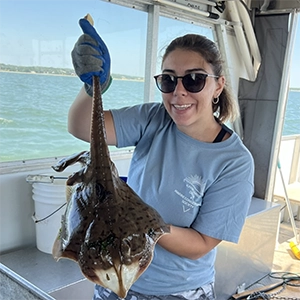
Samantha Alaimo
Downloads
Short History
I grew up on Long Island and spent a lot of my summers in Pennsylvania fishing and exploring. I was always around the water in some capacity and that’s where my interests in marine biology started. I graduated with my BS in Marine Biology (and math minor) from the University of New Haven in 2021. My research there was focused on the spatial distributions and habitats of four flatfish species in the Long Island Sound and the characteristic polynomials of symmetric matrices. I also studied Sustainable Fisheries at the Shoals Marine Laboratory on Appledore Island, ME. Outside of work, you can probably find me fishing, swimming, skiing, kayaking, at the beach, or taking pictures.
Research Interests
Broadly, I am interested in how the physical features of the ocean affect commercially important fish populations. The fishing industry not only provides food to the world, but also contributes a lot to the economy. How will changes in the oceans affect them? More specifically, I am interested in how offshore wind development off the coast of NJ is going to affect fish populations. As an avid fisher, I am interested in how offshore wind is going to affect the fisheries.
Education
2021-Present, Ph.D. Student, Oceanography, Rutgers University
2021, B.S. Marine Biology, University of New Haven
Graduate Student
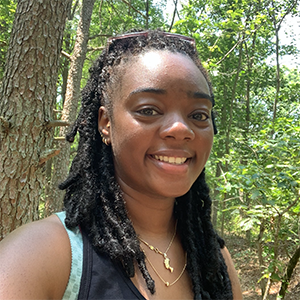
Alexandria Ambrose
Short History
I was born and raised in Detroit, MI, where my interest in science was sparked. My interest in marine systems did not evolve until I started my undergraduate degree. I received my B.S. in Marine Sciences from Savannah State University in 2019. After graduating I started as a lab tech at the Haskin Shellfish Research Laboratory for a year. There I mostly worked on the ecology of oyster at different life stages, using multiple techniques. I am starting as a master’s student in the graduate program of oceanography in 2021
Research Interests
On a broader scope, I am interested in how organisms are using available resources in changing habitats and how these changes can impact an ecosystem. I am also interested in studying how non-aquaculture species interact with sustainable aquaculture practices. My research will focus on the habitat enhancement of hard clams to improve larval recruitment. This work will also include the preservation of clam farms from cownose ray predation in Great Bay. In New Jersey, the hard clam aquaculture industry has decreased in recent years due to multiple factors including, cownose ray predation and limited leasing sites. There is the potential for new leases to be permitted but in deeper waters, but they would be more difficult to maintain. Determining habitat enhancement methods that are low maintenance for the farmer and prevent cownose ray predation could be beneficial to the farmer and the overall clam aquaculture industry in New Jersey.

Graduate Student
Andre Ascura
Short Bio:
Andre joined the lab back in 2022 shortly after graduating from Rutgers University with a bachelor’s degree in marine biology. He supports applied fisheries research and long-term monitoring projects within the lab. He is interested in the application of non-extractive optical survey methods to better compliment current fisheries monitoring efforts for the Mid-Atlantic/Northeast region. Starting Fall 2025, he will be enrolled in the Ecology and Evolution Ph.D. program at Rutgers University.
Graduate Student
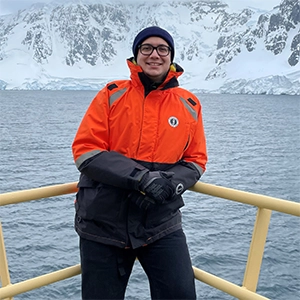
Quintin Diou-Cass
Downloads
My Research Interests
As a scientist, my interests lie in understanding the complex, biophysical interactions that control the ecology of marine phytoplankton. As microscopic plants, phytoplankton can often go by unnoticed, but they play a crucial role in ocean processes, fueling biological carbon cycling and marine food webs. In a changing ocean, we want to understand how shifts in key factors (like light and nutrients) will impact these crucial processes. My research specializes in using physiological diagnostics to decipher the mechanisms between these key factors and important characteristics of the phytoplankton community, like productivity rates, biomass, and composition. As an applied scientist, I focus on using observational timeseries and manipulation experiments to study these underlying mechanisms, aiming to deepen our understanding of ecological dynamics so we can better predict what communities may look like or act like under future conditions.
At Rutgers, my PhD research with Dr. Oscar Schofield focuses on the role of light and photosynthetic biology in Antarctic phytoplankton ecology. I use diagnostics of photosynthetic health to decipher how light availability and photophysiological capabilities control the growth and composition of phytoplankton. I do this specifically in the West Antarctic Peninsula, a rapidly warming region of the Antarctic that’s been studied for over 30 years (and going) by the Palmer Antarctic Long-Term Ecological Research (LTER) program.
Alongside my research, a large part of my scientific ambition also falls into ocean observing systems and the diagnostic tools we use to study phytoplankton community state and function. Both of these have made large advances in scope and technology within the last decade, with high potential to combine the two and expand where/how we measure phytoplankton in the ocean. I’m very interested in the prospects that this bring for the biomonitoring of phytoplankton in our observing systems (especially autonomous and semi-autonomous platforms), and is something I aim to work towards throughout my career.
My Outreach Interests
Beyond academia, I am dedicated to making the ocean and marine science a fun and engaging topic, especially for young students. Hands-on learning about the ocean (how we use it, how it works, and the life that exists throughout it) is what sparked my interest in science and my drive to learn more about the ocean at a young age. My interests in outreach and public engagement revolve around providing these experiences to future generations; helping to develop, organize, and run programs/events for hands-on education in ocean science that bring a hidden world of life to the forefront. If you think similarly and/or have any opportunities in mind, please feel free to reach out!
My Journey to Rutgers
I owe much of my interest in environmental science and the ocean to growing up in Maine, where forests, lakes, and rocky coastal tidepools developed my love of exploration and ecosystems. After high school, I earned my B.S. in Ecology at Susquehanna University in central Pennsylvania, where I was a part of the University’s Freshwater Research Institute (FRI) assisting in studies on stream ecology. In the first two summers of my undergrad, I assisted in field surveys of freshwater streams across farmlands and remote valleys of PA, helping to document progress on farmland restoration projects and gather data to place previously unassessed streams under environmental protection. In the second half of my undergrad, I spent my summers working with Dr. Elizabeth Harvey and her lab at the Skidaway Institute of Oceanography, where I assisted in research examining coastal estuarine phytoplankton dynamics and phytoplankton-bacteria chemical interactions. I came to Rutgers to pursue my interest in phytoplankton that I developed while at Skidaway, pointing my research towards the rapidly changing Antarctic to try and understand the effects of a changing climate on the Southern Ocean.
Education
2018, B.S. Ecology, Susquehanna University
2019-Present, PhD Student, Graduate Program in Oceanography, Rutgers University
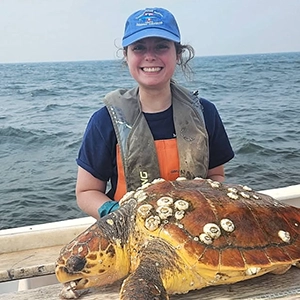
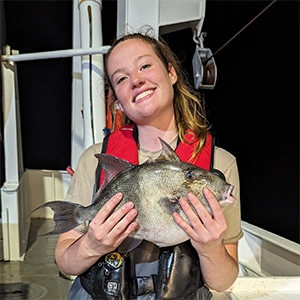
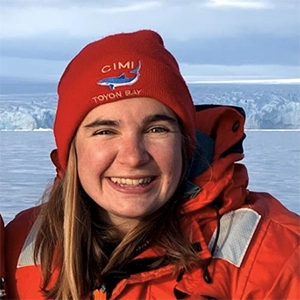
Graduate Student
Ashley Hann
Research Interests
I am broadly interested in utilizing varied in situ and autonomous techniques to understand dynamic marine ecosystems while facilitating sustainable and meaningful interactions for others with said systems. More specifically, I focus on the impacts of changing ocean conditions on lower trophic level organisms and the implications of that for the larger ecosystem and society. At Rutgers, I am working with Grace Saba to explore the zooplankton assemblages and ecosystem dynamics of the U.S. Mid-Atlantic Bight and other coastal regions. I aim to conduct actionable science that is connected to local stakeholders and lifelong learners through outreach and education.
Short History
Growing up in coastal NJ, the state’s waterways served as my first playground and classroom — inspiring a career studying the ocean. Prior to joining Rutgers, I worked in federal marine policy and science communication, initially as a Knauss Fellow with the Oceanographer of the Navy and later as program specialist with the NOAA Uncrewed Systems Operations Center. I have also worked as an educator and science communicator for university, non-profit education, and regional park programs. I hold an MS in Marine Resource Management from Oregon State University, as well as a BS in Marine Biology from the University of North Carolina Wilmington. Additionally, I am a certified NAUI Rescue SCUBA Diver, American Red Cross Ocean Lifeguard, and National Wildlife Coordinating Group Basic Wildland Firefighter. In my free time, I enjoy exploring outside on foot or bike, crafting, cooking, and any activity that gets me on the nearest swimmable body of water.
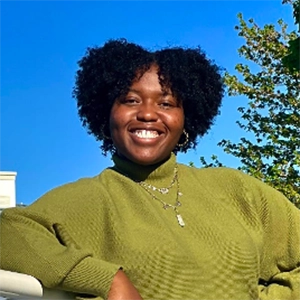
Graduate Student
Leah Hopson
Downloads
Short History
While growing up in New York, specifically in the lower Hudson Valley region, I was able to explore many aspects of our environment. My interests in the environment grew from taking a high school earth science course to which I learned about tropical cyclones and thus, I developed a strong curiosity in extreme weather events. This led me to go on to study environmental changes and earn my B.S. in Atmospheric and Oceanic science from the University of Maryland. During my undergrad, I was able to participate in different research experiences, and over time, these experiences carved out my path in physical oceanography to understand air-sea interactions.
Research Interests
My last research experience during my undergrad solidified my interests in oceanography even further. This project, through Texas A&M University, focused on the relationship between ocean heat content and tropical cyclone induced rainfall in the Gulf of Mexico. With my atmospheric science research experiences and my oceanography related experience, I developed an interest in studying the dynamics of the ocean and atmosphere and understanding the intensification of tropical cyclones over time. I hope to gain many skills from the different areas of oceanography to continue studying extreme weather with my advisor Dr. Travis Miles during my time as a PhD student.
Education
2021, B.S. Atmospheric and Oceanic Science, The University of Maryland
2022-Present, PhD Student, Graduate Program in Oceanography, Rutgers University
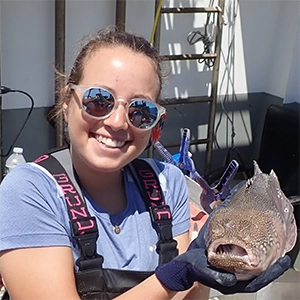
Graduate Student
Becca Horwitz
Download
Short History:
I grew up in Brooklyn, New York, and had the East River estuary system as my backyard which has inspired both my career path and my research interests. I attended Carleton College for my undergraduate education where I received a double Bachelor of Arts degree in Geology and Environmental Studies in 2022. I participated in a Marine Science NSF-REU at Rutgers in 2021 between my junior and senior years of college. My work during my REU exploring fundamental shelf processes in the Mid-Atlantic set the stage for my current research. After graduating from Carleton, I worked for the Rutgers University Haskin Shellfish Research Laboratory where I learned about fisheries science and the shellfish industry. Long story short, I fell in love with Rutgers and I never left! Outside of work, you can find me rock climbing, sitting in my hammock, playing with my cat Trudie or training for a triathlon.
Research Interests:
I am interested in the overlap between physical and biological oceanography although I approach my research from a physical perspective. I strive to connect my research with the broader communities impacted by my science. Specifically, my thesis work focuses on using observational data to understand the frequency and drivers of marine extreme temperature events in the Mid-Atlantic.
Graduate Student
Jake Kuenzli
Bio:
I’ve known that I’ve wanted to be a marine biologist since I was five years old- despite growing up in Detroit almost a thousand miles away from the ocean. I moved to the College of Charleston for my undergrad, where I’ve been a part of three research projects: biogeochemical interactions between sponges and coral reefs, characterization of a new algal species that I helped discover, and effects of temperature on the physiology of coastal elasmobranchs. When I’m not doing research, I love spending my time at the beach- hiking, surfing, scuba diving, and playing sports with friends.
Research Interests:
My main research focus is broadly on marine vertebrate behavior, distribution, and ecology. More specifically, I am interested in how environmental conditions influence these particular factors.
Graduate Student
Isabella Moore
Short Bio
Growing up along the Delaware Bay, I quickly developed a passion for the ocean. I spent my childhood flipping over
horseshoe crabs and learning to surf. For the past five summers, I worked for the Cape May Beach Patrol, which has been a very rewarding experience. I received my Bachelor’s degree in Marine Science from Stockton University. This year, I completed my Master’s in Marine Science with a concentration in Physical Oceanography at the University of South Carolina. I am excited to explore my research interests here at Rutgers! Pictured is my dog Zee, a rescue from Kosovo.

Graduate Student
Mya Sharpe
Short Bio
As a child, I didn’t have many waterways near my home growing up in Brooklyn, New York. During summertime, I would take the train to Coney Island beach for about an hour. My days there were spent searching the shoreline for washed up sea creatures. As discoveries grew, my interest peaked. A few feet from the shoreline, I dug a hole in the sand and filled it with seawater to create a makeshift touch pool. Then, unknowingly, I took my first steps towards my future career, by observing their anatomy and admiring their textures.
Research Interest
In our current era of rapid global warming, the polar regions are experiencing the most significant impact, leading to the retreat of perennial glaciers. This, in turn, affects phytoplankton blooms and community composition in coastal waters. My current research interests revolve around exploring phytoplankton ecology in the West Antarctic Peninsula (WAP). Specifically, I am focused on understanding glacial retreat dynamics, the trace metal composition of glacial meltwater, and how the availability of metals influences phytoplankton communities. This, in turn, plays a key role in shaping the biogeochemistry of nonmetals like carbon and nitrogen. A subtopic area of interest is the effects of copper (Cu) in low iron conditions, particularly in the context of glacial melt into coastal waters. Additionally, I aim to examine phytoplankton variations in fluorescence under iron-limited conditions.

Postdoctoral Researcher
Frank McQuarrie
Short Bio
Dr. Frank McQuarrie is an oceanographic engineer who got his Bachelor’s from Rutgers in 2016. He was deployed to Palmer Station, Antarctica twice with the Schofield lab, spent a few years working at the Catalina Island Marine Institute teaching marine sciences and surfing, then completed a PhD at the University of Georgia. He is excited to be back at Rutgers working with Dr. Travis Miles on the National Academies UGOS project, leveraging glider data to understand currents and ocean movements in the Gulf of America.
Research Interests

Master of Operational Operation
Trevor Barry
Short Bio:

Master of Operational Oceanography
Aishlin Ingraham
Short Bio:
I completed my undergraduate degree at Rutgers University, majoring in Physical Oceanography and minoring in Mathematics. I have always known that I wanted to use technology to help our oceans, and physical oceanography was the perfect fit, allowing me to apply mathematics, computer science, and data analysis to ocean science problems.
During my REU at University of South Florida, I conducted research with Dr. Steven Meyers and Dr. Mark Luther on facilitating historical tide gauge digitization using artificial intelligence. My work focused on improving the efficiency and accuracy of converting historical oceanographic records into digital datasets that can be used for modern analysis.
I was drawn to the Master of Operational Oceanography program because of its emphasis on real-time observations, forecasting, and applied ocean science. Looking ahead, I hope to leverage machine learning and advanced data analytics to improve ocean current forecasts and develop high-resolution current mapping tools that enhance maritime navigation and improve our understanding of small-scale ocean dynamics and water mass movement.

Master of Operational Oceanography
Alexandra Johannsen
Short Bio:
My name is Alexandra, but I go by "Allie." I grew up in Southern California, not far from the ocean. I think that's where my love of the ocean began. After a few years of meandering through community college, trying to figure out what I wanted to do. I got involved in some field ecology classes that sparked my interest in Marine ecology and oceanography. After earning my AS in biology and a certificate in field ecology, I attended Cal Maritime Academy and earned my BS in oceanography. The amount of time I've spent in school has allowed me to have some wonderful experiences, including two volunteer positions on NOAA fishery cruises, which led me to want to pursue research. I'm not very picky about what I want to study, but I do have some special interests in marine mammals and Crustaceans. I previously did undergraduate research on HABs in the SF estuary, and I'd love an opportunity to explore HABs' impacts on the East Coast. Not related, but I also really love ice cream, despite my lactose intolerance trying to hinder my consumption of it.
Master of Operational Oceanography
Lauryn Jones
Short Bio:
I graduated from College of Charleston with a B.S. in Marine Biology and photography minor, originally from Maryland. I have a passion for oceanography, journalism, and photography, I hope to intertwine them through my career. During undergrad, I conducted herring observation through Mashpee, MA, focusing on herring migration patterns alongside the Mashpee Wampanoag Tribe. In addition to various smaller projects, concentrating on organismal biology. Now that I'm at Rutgers, I will be studying operational oceanography. My goals are to bring awareness to our oceans through biological and oceanographic sciences and play a role in conservation of the deep blue."

Master of Operational Oceanography
Lianne Lairmore
Short Bio:
I am originally from Rochester, NY. I got an undergraduate degree in Computer Science from Bucknell University followed by a Masters in Computer Science at Columbia University. I then spent 10 years working in robotics and embedded software development where I worked on a variety of projects from house key cutting robots to methane sensor arrays to lab equipment. Although I enjoyed my work I am back in school to follow my passion to learn about marine sciences and use the skills I have acquired to contribute to the field.

Master of Operational Oceanography
Tyler Lewis
Short Bio:
I am from Neptune City, NJ and graduated from Rutgers in 2025 with an undergraduate degree in Marine Science and minor in Fisheries. In the past year I've been volunteering at RUMFS Tuckerton on their continued bridge netting efforts, assisting Ken Able with sorting preserved specimens. I also had the pleasure of horseshoe crab tagging with the American Littoral Society, surveying glass eels with JC NERR, and anything else I can do to further my knowledge in the field. During my undergraduate studies I was able to work on trawl surveys to gather data on smooth and spiny dogfish as well as incorporating side-scan sonar for a poster I presented for the MAC/AFS meeting in 2024. This foray into research really sparked my love for this field and showed me that even if the hours are long, it never feels like work. I am interested in learning more about remote sensing technologies such as acoustic telemetry to use in conjunction with physical oceanography to properly understand the environment organisms live in, so I can help further conservation on macrofauna!
Master of Operational Oceanography
- DMCS
Conor O’Mara
Short Bio:
Conor has a rich background in marine science and environmental studies. He earned his B.S. in
Marine Science, with a minor in Environmental Policy, Institutions, & Behavior from Rutgers
University. Driven by a passion for marine life and coastal sciences, Conor has gained invaluable
experience through transformative internships.
- Central Caribbean Marine Institute (Little Cayman) – Coral Reef Research Intern
- Barbados Sea Turtle Patrol (St. Michaels, Barbados) – Focusing on Hawksbills & Leather Backs. Tagging nesting females or diving to tag juvenile males, nest relocation & excavations, rescue response, and data analysis. Also, direct education & guidance to the local community/travelers.
- Dolphin Cove & Marine Mammal Responder – Husbandry & Research Intern. Assisted in emergency first aid/transport/rehabilitation of Atlantic Bottlenose Dolphins, including veterinarian procedures/surgeries and necropsies.
- Rutgers Aquaculture Innovation Center – Field Technician, working with Oysters/Ribbed Muscles/Surf Clams/Bay Scallops.
- Volunteer Roles: Diver for NY Aquarium, Education & Outreach at Jenkinson Aquarium,
Husbandry/Diver at Staten Island Zoo & Lahaina Wildfire Recovery.
Conor’s professional journey includes influential roles as an Environmental Scientist, where he
conducted Phase I & Phase II environmental site assessments: including data analysis/extrapolation of final certified lab reports. On the other end of the spectrum, he was also an area manager for Costco Wholesale.
Outside of his professional pursuits, Conor exemplifies leadership and resilience, having earned the rank of Eagle Scout with the BSA and being an active member of the Order of the Arrow. He is also a Rescue Level SCUBA Diver & certified in Wetland Delineation.

Master of Operational Oceanography
Erika Tam
Short Bio:

Master of Operation Oceanography
Noah Shubin
Short Bio:
I am from Lafayette Hill, PA. I graduated from undergrad at Eckerd College, in St. Petersburg Florida, with a B.S. in marine science and a minor in computer science and applied mathematics.
At Eckerd, I have had great hands-on opportunities such as collecting water samples to measure trace metals (Pb, Zn, Cu) in Tampa Bay using FIO vessels and flame atomic absorption spectroscopy. Additionally, I had the opportunity to teach myself the basics of R by collecting DO bottle data online and correlating ENSO events with surface dissolved oxygen levels off the coast of California using R graphing and correlation analysis.
At Rutgers I will be studying operational oceanography. While at Rutgers, I hope to be able to continue this combination of marine science/oceanography and computer science, while gathering great experiences with marine technologies. I also have a love of sharks and scuba diving achieving my PADI open water scuba instructor certification during the summer of 2023.