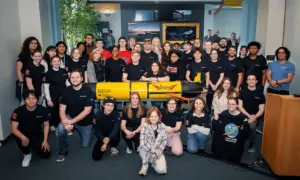
Students in the Rutgers Masters in Operational Oceanography program heard firsthand today how real-time ocean data is transforming industry, science, and environmental monitoring. They were joined by Jarrah Orphin, Account Executive at Sofar Ocean. Orphin, who has worked in technology startups in both the United Kingdom and the United States, described how his journey led him to join Sofar Ocean, a company dedicated to “connecting the world’s oceans to power a more sustainable future.”
Orphin began by briefly tracing his path into marine technology. After working on a grid-scale renewable energy system overseas, he relocated to the United States, eventually joining Sofar. His current role spans the Americas and Australia, helping researchers, government agencies, and industry customers collect real-time marine data using Sofar’s Spotter platform.
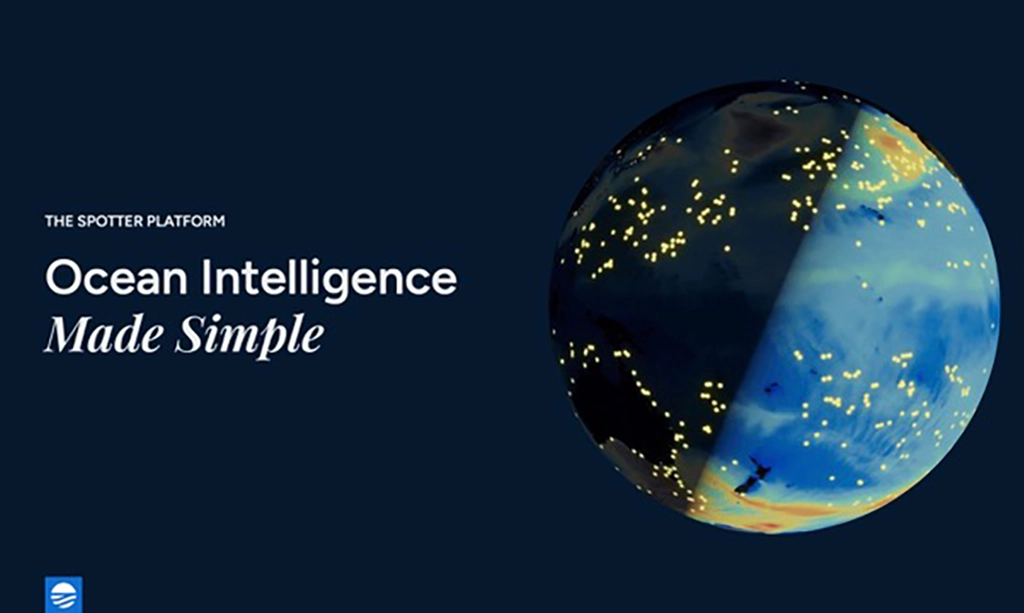
Students were introduced to Sofar Ocean’s core philosophy: building a vertically integrated ocean intelligence platform consisting of hardware, software, and applications. At the foundation is the Spotter buoy, a compact, solar-powered device designed to collect weather and ocean measurements at scale. Sofar manufactures these units in-house at its San Francisco facility, and thousands are now deployed globally—roughly 600 at any given time in open-ocean locations.
By assimilating millions of observations from this network each day, Sofar generates high-accuracy marine-weather forecasts. These forecasts power Wayfinder, a routing application Orphin described as “Google Maps for the shipping industry.” By suggesting more efficient routes for commercial vessels, Wayfinder has already saved enough fuel to the equivalent of removing 100,000 cars from the road, according to Orphin’s recent calculations.
Orphin highlighted several recent collaborations with NOAA to advance forecasting capabilities. In one effort, Spotters have been co-deployed with deep-water tsunami-monitoring systems. In another, Sofar supported hurricane research by air-deploying Spotters into the Gulf of Mexico to collect storm-surge and wave data.
Sofar’s technology has also been used in wildlife studies. In partnership with BayQuest, Spotter units equipped with a new acoustic module are being used to detect whale vocalizations, vessel presence, and potential interaction risks.
One theme repeated throughout the talk was accessibility. Traditional scientific buoys can cost many times more than Spotters and require large vessels, specialized technicians, and complex integration. In contrast, Spotters can be lifted by hand, deployed from small boats, and configured without advanced engineering experience.
The session concluded with a walk-through of Sofar’s live dashboard, showing students how ocean conditions—wave height, wind, current speed, subsurface measurements, and more—are made available instantly from anywhere in the world.
Orphin emphasized that the ocean, once viewed as difficult and costly to study, is entering a new era where distributed instrumentation and open-access data are reshaping science and maritime operations. The talk left students with a clearer understanding of how cutting-edge technology is opening the ocean to discovery and management, inspiring many to think about careers related to marine engineering, climate science, and sustainable innovation.