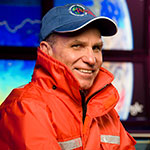
Distinguished Professor
Scott Glenn
Research Interests
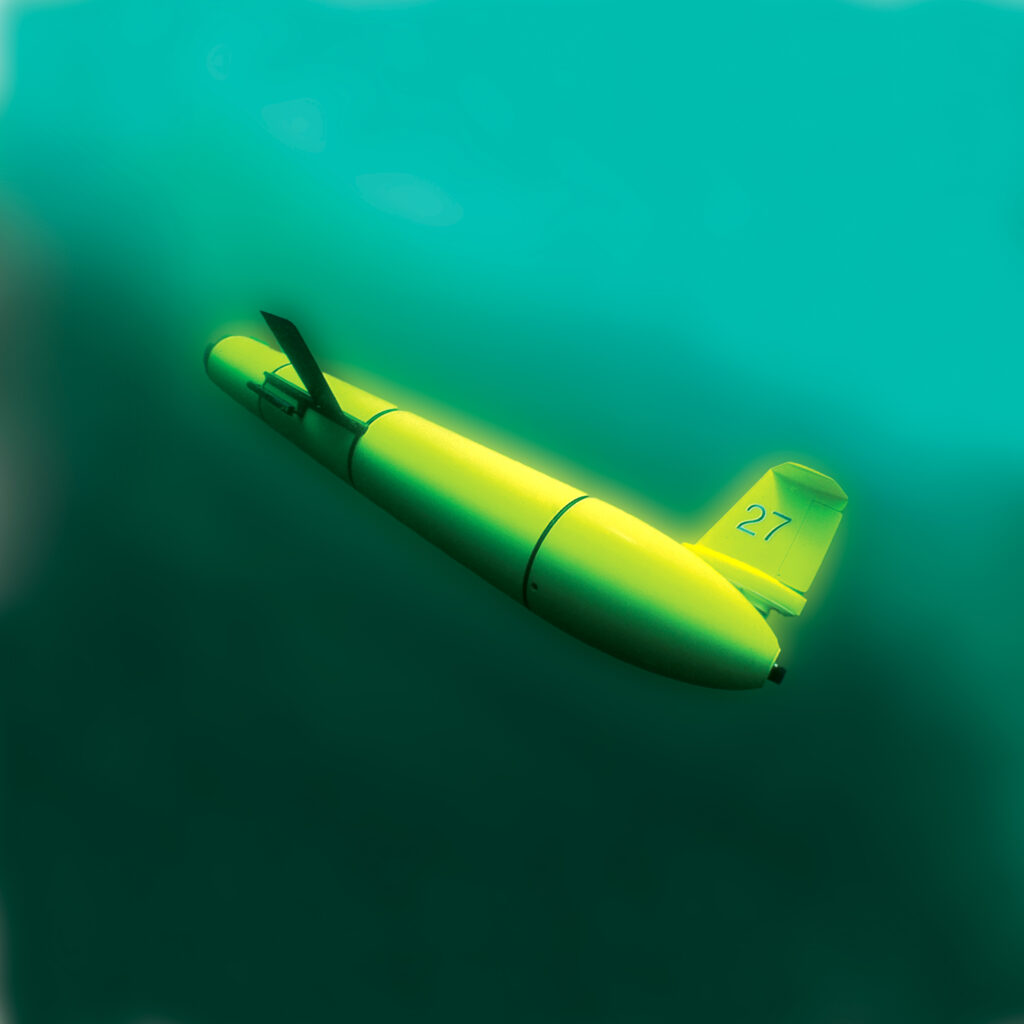
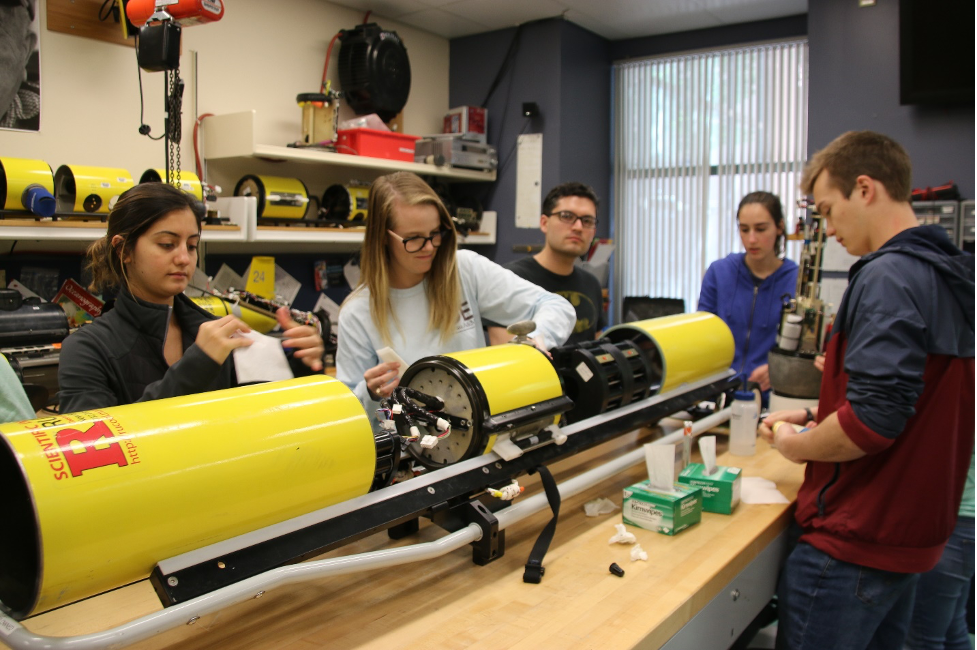
My research interests include the development of new autonomous ocean observing technologies, their application to scientific research in remote and extreme environments, and the demonstration of new educational paradigms. My technology development work focuses on autonomous systems that can be operated remotely as distributed networks to improve the spatial sampling of complex environments. A major scientific focus is extreme events, including storms, hurricanes and typhoons, investigating with observations and numerical models the linkages between the ocean, the atmosphere above, and the seabed below. My educational activities are designed to better prepare students to meet the challenges of a changing environment using modern observatories to explore the global ocean.
Short History
After graduating from the Massachusetts Institute of Technology and Woods Hole Oceanographic Institution Joint Program in 1983 with a Sc.D. in Ocean Engineering, I began an over 30-year research career of implementing sustained real-time ocean observation and forecast systems first for offshore oil exploration at Shell Development Company (1983-1986), then for the Naval Oceanography Command supporting fleet operations while at Harvard University (1986-1990), and, since 1990, for a wide range of scientific and societal applications at Rutgers University. In the only U.S. national program to recognize excellence in undergraduate teaching, I was named one of the U.S. Professors of the Year representing the State of New Jersey by the Carnegie Foundation for the Advancement of Teaching and the Council for Advancement and Support of Education.
Teaching Efforts
Dynamics of Waves, Currents and Sediment Transport (Oceanography – Grad)
Ocean Observatories Research Course (Marine and Coastal Sciences – Undergrad)
Oceanography House (Marine and Coastal Sciences – Undergrad)
Ocean Methods and Data Analysis (Marine and Coastal Sciences – Undergrad)
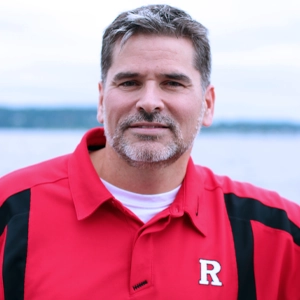
Professor
Josh Kohut
Downloads
Research Interests
Physical processes in the coastal ocean are highly variable in space and time and play a critical role in coupled biological and chemical processes. From events lasting several hours to days on through inter-annual and decadal scales, the variability in the fluid itself structures marine ecological systems. My approach is to apply ocean observing technologies that now sample across these important time and space scales to better understand the physical ocean that structures marine ecosystems. I am involved in many research and education programs that range in scope from storm intensity, offshore wind, and local water quality monitoring off the NJ coast; regional fisheries along the US east coast; and environmental studies of polar ecosystems in the coastal waters surrounding Antarctica. Consequently, this new knowledge has relevancy to broader stakeholder communities with interests in the coastal ocean. Working through partnerships across these stakeholder groups, my research is collaborative and supports both science and application. Through these partnerships I am able to frame relevant scientific hypotheses and efficiently translate the output to better management and monitoring.
Short History
Growing up in New Jersey, my interest in the physics of the ocean began along the shores of Barnegat Bay. After receiving my Bachelor’s degree in Physics at the College of Charleston in Charleston, SC, I returned to New Jersey and began my research career at Rutgers. Now I look forward to addressing new science and, working through partnerships, translating that science into applications that benefit the many stakeholders with interests in the coastal ocean.
Teaching Efforts
Oceanography House
Topics in Marine Science: Ocean Observing

Master of Operational Oceanography (MOO) Degree Program Director
Alex Lopez
Downloads
Research/Teaching Interests
My research interests include applications of regional ocean models to transport pathways and timescales, as well as simulating regional microplastic particle fate. My teaching interests include developing students into skilled researchers that exemplify lifelong learners, through critical thinking engagement, practical learning experiences, and presentation opportunities.
Short History
I received my B.S. in Physics from The College of New Jersey in 2010, then a Master of Arts in Teaching in 2011, also from The College of New Jersey. I received my Ph.D. from Rutgers, The State University of New Jersey in 2020, studying circulation timescales and transport pathways of the Mid-Atlantic Bight and Gulf of Maine using ROMS. I was a postdoctoral scholar at Pennsylvania State University, studying microplastic particle fate within Chesapeake Bay using modeling.
Teaching Efforts
16:712:505 Integrated Ocean Observing 1
16:712:506 Integrated Ocean Observing 2
16:712:507 Field Laboratory Methods 1
16:712:508 Field Laboratory Methods 2
16:712:509 Integrated Ocean Observing – Software Bootcamp
16:712:510 Operational Ocean Modeling & Data Visualization
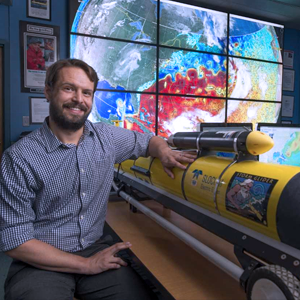
Associate Professor
Travis Miles
Downloads
Research Interests
I am a physical oceanographer interested in understanding how the atmosphere, cryosphere, earth, and ecosystems connect through the ocean across a broad range of temporal and spatial scales. To understand these connections I use and develop ocean observation networks that sample across spatial and temporal scales in combination with process oriented numerical modeling. I am involved with an array of multi-disciplinary projects that involve: 1) Rapid response Teledyne-Webb Slocum glider deployments ahead of coastal storms; 2) investigation of the ice-ocean interactions in the Amundsen Sea and 3) development of novel satellite products in support of wind resource estimates for coastal New Jersey.
Short History
I received my B.S. in Marine science and Meteorology from North Carolina State University (NCSU) in 2007. In 2009 I completed a Master’s in Physical Oceanography also at NCSU under the direction of Professor Ruoying He. I received my PhD from Rutgers University in 2014 studying sediment resuspension and transport during Nor’easters and Hurricanes, specifically Sandy in 2012. I am currently an Assistant Research Professor in the Rutgers University Center for Ocean Observing Leadership (RUCOOL).
Teaching Efforts
I currently co-teach Ocean Methods and Data Analysis, a hands on class that introduces undergraduates to oceanographic equipment and data processing techniques.
Associate Professor
Grace Saba
Downloads
Research Interests
I initiate diverse, multidisciplinary projects in order to address both small-scale (individual organism) and large-scale (whole ecosystem) questions with ecological, physiological, and biogeochemical implications. My broad research interests are in the fields of coastal marine organismal ecology and physiology, with emphasis on how organisms interact with their environment (physical-biological coupling) and other organisms (food web dynamics and predator-prey interactions), how physiological processes impact biogeochemistry (nutrient cycling and carbon sequestration), and how climate change (i.e., ocean acidification, warming) impacts these processes. I apply multiple techniques and collaborate with physical/biological/chemical oceanographers and physiologists, molecular ecologists, fisheries scientists, ocean observers, and climate modelers. I employ an integrative, mechanistic approach and have strong laboratory and field components in my research.
Short History
I received my Bachelor of Science degree in Aquatic Biology in 2002 from the University of California Santa Barbara, then received my Ph.D. in Marine Science in 2010 from the College of William & Mary at the Virginia Institute of Marine Science. I was a post doctoral research associate at Rutgers University from 2010-2012, was promoted to Assistant Research Professor in 2012, and to tenure-track Assistant Professor in 2015.
Teaching Efforts
Fall 11:628:363 OCEANOGRAPHIC METHODS AND DATA ANALYSIS: BIOLOGY/CHEMISTRY (3 cr; Fridays 10:55-5:15)
Prerequisites: 11:628:320; Rutgers REHS Laboratory Safety Training
Description: This course focuses on basic techniques to collect, analyze, and report oceanographic and marine science data with emphasis on biological and chemical variables. This will include interactive lectures, team-based hands-on field sampling, laboratory sample analysis, writing and presenting results, and writing a scientific paper. Teamwork is required for this course. This course will require some travel as well as work outdoors, aboard research vessels, and in the laboratory with chemicals.
Fall 11:628:461/16:712:520 THE BIOLOGY OF LIVING IN THE OCEAN: WATER COLUMN ECOSYSTEMS & PROCESSES (3 cr; Mondays/Thursdays 12:35-1:55)
Prerequisites: 11:628:320, 1 term Calculus, 2 terms General Biology; Recommended: General Chemistry and Physics
Description: The ocean is the majority of Earth and the largest biome on the planet. Processes that occur in the water column are highly dynamic and central to regulating the planet’s biogeochemistry which influences how much oxygen we breath, how many fish exist, and how much oil is available to human’s to extract. This course will cover the processes that regulate the biology of the plankton and fish, which drives the community ecology for ocean ecosystems. This course covers ecological themes such as the acquisition and transformation of energy and materials, population regulation, competition/predation dynamics, population connectivity and marine food webs. The course will also highlight approaches and technologies used to make measurements in the ocean.
Fall/Spring 16:712:605, 606 OCEANOGRAPHY SEMINAR (1 cr; Tuesdays 10:55-12:15)
Prerequisites: 16:712:501, 520 or 522, 540.
Description: Scientific papers are read in order to foster discussion and critical analysis by students of important scientific topics. Papers are selected from all disciplines with an emphasis on interdisciplinary studies, typically with a specific theme each semester. Faculty instructors provide guidance and comment.
Spring 11:628:130 SEA MONSTERS AND WEIRD BIOLOGY IN EARTH’S OCEANS (3 cr; Mondays/Thursdays 12:35-1:55)
Prerequisites: None
Description: We live on an ocean planet. The ocean is full of giant sharks, mythic squids, gargantuan worms, and microbes that shape the planet. Biology is continually adapting and evolving, driven by the environment in which it lives. The ocean encompasses extremes in physical and chemical properties, which have produced weird and unique organisms that live in an environment unlike anything in our human experience. These organisms affect our lives. This class will use the ocean to explore how biology adapts and evolves. We will also explore how the ocean shaped our views of nature, assess how the ocean is changing, and consider how sustainable it will be in the future. Our goal is to increase the biological and ocean literacy of students. The course will be overseen by two faculty, but the course will also include lectures from leading Rutgers scientists who have spent their careers exploring biology in the ocean and will speak on their areas of specialization.
Distinguished Professor and Department Chair
Oscar Schofield
Downloads
Research Interests
I am a biological oceanographer interested how the physics and chemistry regulates ocean ecosystems, with a primary research focus on the physiology and ecology of phytoplankton. My research is conducted in a range of oceans from the rapidly warming/melting along the West Antarctic Peninsula to sustained studies along the northeast United States. Additionally I am part of the Center of Ocean Observing Leadership (COOL), which is focused on developing new technologies and ocean sensor networks to better document and model the marine system. The COOL group has, and continues, to innovate a range of technologies spanning from remote sensing, radars, and autonomous underwater robotics. Our research efforts are coupled to an extensive public outreach effort focused on communicating the excitement and adventure of conducting science in the field. These outreach efforts have been anchored by extensive web services, teacher training and full length feature movies.
Short History
I grew up swimming, fishing, diving and surfing in Southern California. I decided to pursue a degree in biology and marine science and attended the University of California at Santa Barbara for my undergraduate and PhD where I conducted research on photosynthesis and environmental impacts of the Antarctic ozone hole. I then joined the Agricultural Research Service in New Orleans conducting research in aquaculture and microbial production of off-flavor metabolites before I joined Rutgers in 1995.
Teaching Efforts
Ocean Observatories (a research course focused on student conducting research with live data from the sea, taught both Fall and Spring terms)
Oceanographic Methods and Data Analysis (course focused on the collection and analysis of physical, optical, and biological data in aquatic systems, taught spring term)
Oceanography House (course open to first term freshmen to introduce them to thriving in a research University by exposing them to ocean adventure)
Biological Oceanography: Planktontic Ecosystems (course focused physiology, ecology, and biogeochemistry of planktonic ecosystems and their role in shaping the ecology of the ocean and Earth, this course will be offered in Fall terms)
Technical Director: RUCOOL & MARACOOS
Mike Crowley
Downloads
Research Interests
Michael is the Technical Director for the Rutgers University Center for Ocean Observing Leadership (RUCOOL) and the Mid-Atlantic Regional Association Coastal Ocean Observing System (MARACOOS). His RUCOOL work includes: management of operations the entire COOL Lab, ensuring continuous quality data delivery from RUCOOL, and heading up the external communications for the RUCOOL Team including oversight of our website.
Michael is also the Technical Director for the U.S. Integrated Ocean Observing System (IOOS) MARACOOS. Michael oversees all aspects of data collection within the Mid-Atlantic Bight (Cape Hatteras to Cape Cod). MARACOOS collects data primarily from satellites, HF-RADAR and underwater ocean gliders. Data from all the instrumentation is used to feed and test ocean forecast models, with the ultimate goal being to better enable scientists to forecast both the ocean and atmospheric weather for the greater good of the Mid-Atlantic region. All of the data and much more can be viewed at oceansmap.maracoos.org.
Short History
1991 B.A. Geography, Rutgers University, New Brunswick, New Jersey.
1993 M.S. Geography/Oceanography, Rutgers University, New Brunswick New Jersey.