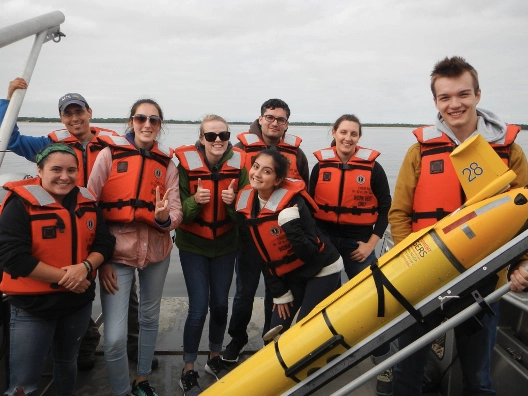
Founded on the principle of taking calculated risks in pursuit of scientific advancement, Teledyne Marine has stood firm in their belief that true success comes from cooperative learning experiences and synergistic partnerships. For over two decades, Teledyne has been an integral part of the Department of Marine and Coastal Sciences at Rutgers University and has supported the success of countless oceanographic research efforts. This collaboration continues through the Redwing Glider Project. The Teledyne team continues to work with Rutgers Students as talented glider pilots. Students provide information about pathfinding and data analysis and the Teledyne Pilots provide updates on how Redwing is responding. It is through this collaboration that, for the first time in ocean history, a glider will make it all the way around the world
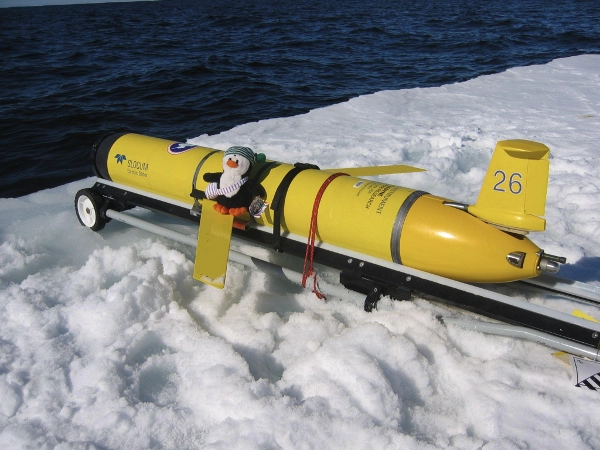
Among the many ocean-based science instruments Teledyne has engineered, the Slocum gliders developed by the Webb Research Lab have been the most influential and revolutionary piece of technology for academic research in the modern age. Slocum gliders are the embodiment of Teledyne’s mission to make marine research safer, easier, and more reliable by allowing robots to facilitate data collection needs in high-risk environments. Furthermore, the Slocum gliders have proved to be a key asset to another of Teledyne’s major goals: promoting student involvement and leadership in academic research.
Students at Rutgers University use Slocum gliders everyday to explore the oceans and conduct research from their computers. Testaments to Teledynes success, such as undergraduate students making ocean exploration history by remotely operating the first underwater glider across an ocean basin in 2009, have proven that the most rewarding partnerships are the ones which combine the wisdom of experts and the curiosities of students.