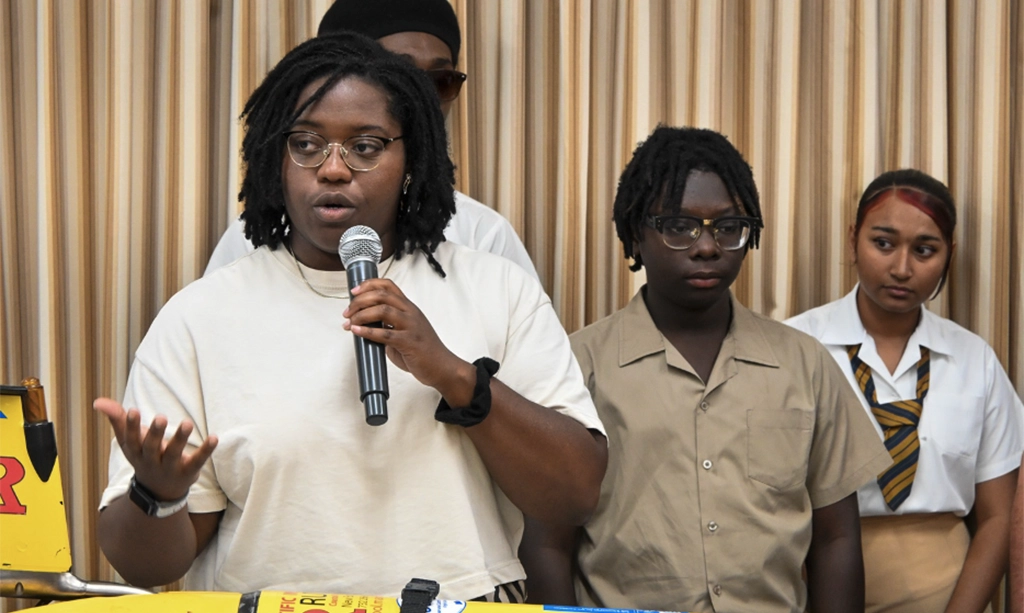
Over the past 2+ decades, Rutgers University’s Center for Ocean Observing Leadership has not only assisted in the development and hardening of Slocum autonomous underwater gliders, they have led the charge distributing this technology worldwide. Through collaborative expansion efforts focused on capacity building, RUCOOL has helped establish multiple “glider ports” overseas, enabling persistent ocean observations in typically under-observed environments. With glider ports already established in St. Thomas (USVI), Brazil, Australia, Mexico, and more, sights have been set on the island nation of Barbados as part of a multi-faceted project incorporating glider data for hurricane intensity forecasts, supporting ecosystem science while scouting the area for an upcoming cruise focusing on “staircase” structures in the water column, and collaborating with local entities, officials, and schools to educate the future guardians of the sea.
This is the second year in a row that Rutgers professors, students, and technicians, and the Intergovernmental Oceanographic Commission for the Caribbean and Adjacent Regions (IOCARIBE) leadership, have traveled to Barbados to work with colleagues at CIMH, the Caribbean Institute of Meteorology and Hydrology, on a glider mission designed to record the physical structure of the water column around the southern Caribbean islands, capturing the fresher outflow from the Amazon and Orinoco Rivers in the upper 30 m of the water column and documenting the salinity maximum of the Subtropical Underwater around 120 m. These, along with other measurements, can help correct models that show a colder, less stratified ocean that mixes easier and reduces hurricane intensity, leading to incorrect forecasts and potentially endangering lives.
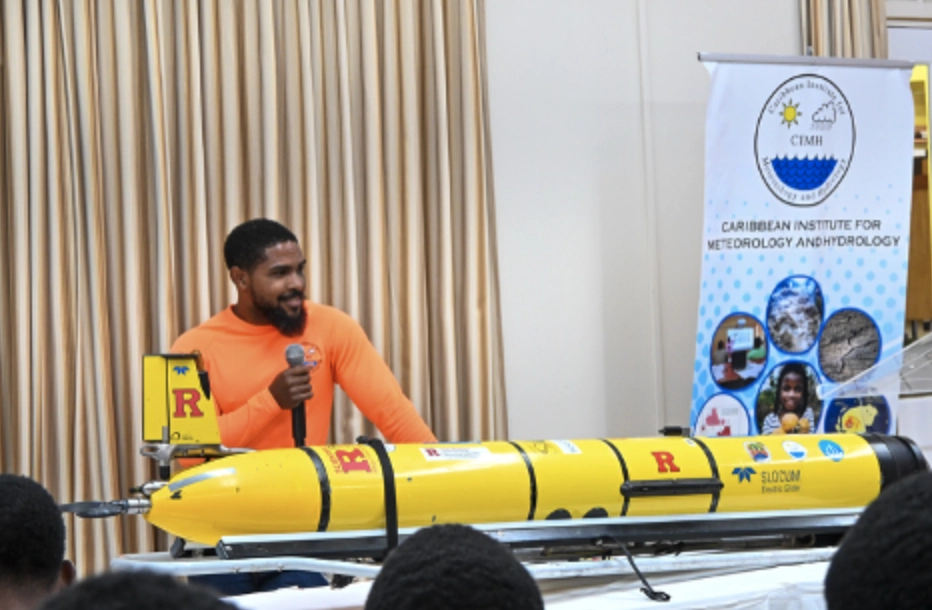
CIMH technician Courtney Forde, who has recently completed glider training at Rutgers, speaks to students and constituents about the glider and its importance in Caribbean waters.
Having access to proven technologies providing crucial data is no longer a luxury – it has become a necessity in a warming planet, and the people of Barbados have seen value in investing in a glider port of their own.
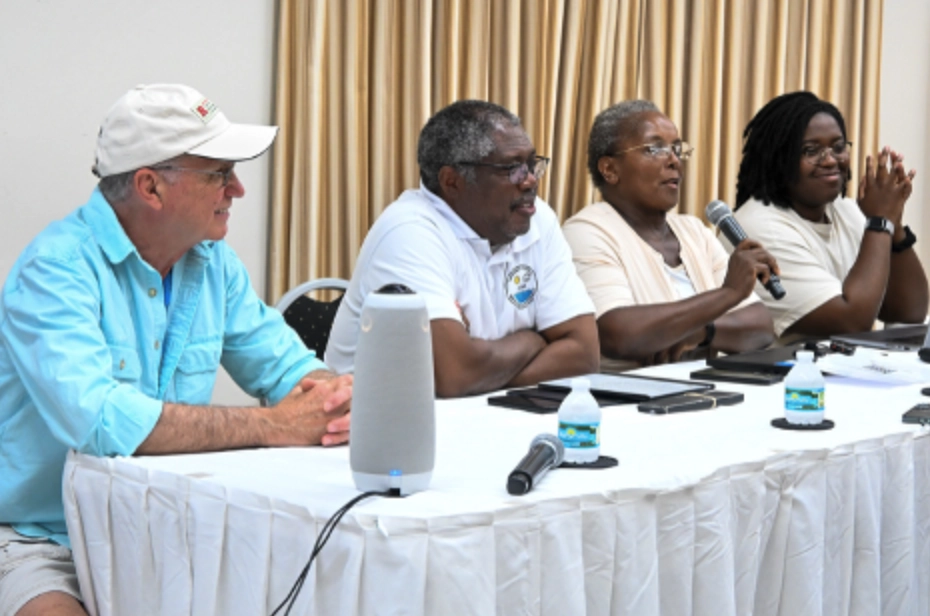
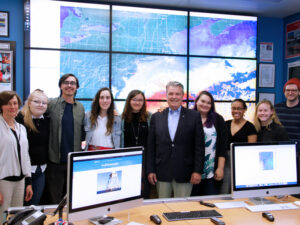
Professor Scott Glenn, CIMH Principal David Farrell, Regional Secretariat for IOCARIBE Lorna Inniss, and Rutgers graduate student Leah Hopson speaking to students and constituents about gliders, data, and associative issues.
IOCARIBE lead Lorna Inniss and CIMH Principal David Farrell have submitted proposals to fund a glider port in Barbados, starting with a request for one glider from the InterAmerican Development Bank and a second from the Caribbean Development Bank. The addition of Rutgers glider RU29 creates an initial fleet of 3 gliders patrolling the southern section of the Caribbean, exponentially increasing the number of water column profiles available for model ingestion.
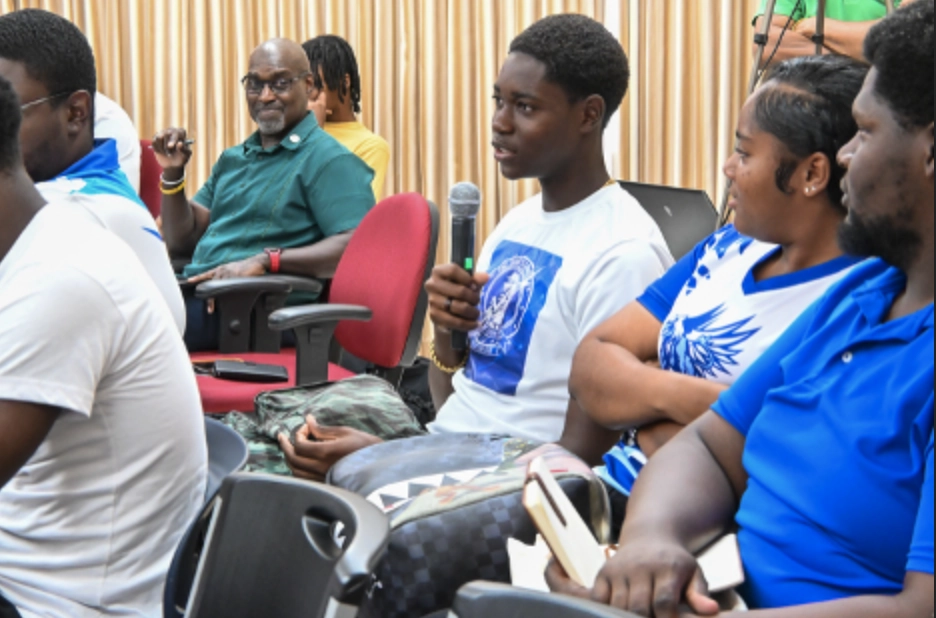
Caribbean Development Bank Operations Officer Antonio Rowe looks on as a student asks a question of the panel.
This initiative has gained momentum island wide and is backed by the local government as well, as not only is the data potentially lifesaving, the technology itself lends itself to educational and professional opportunities for students and workers respectively.
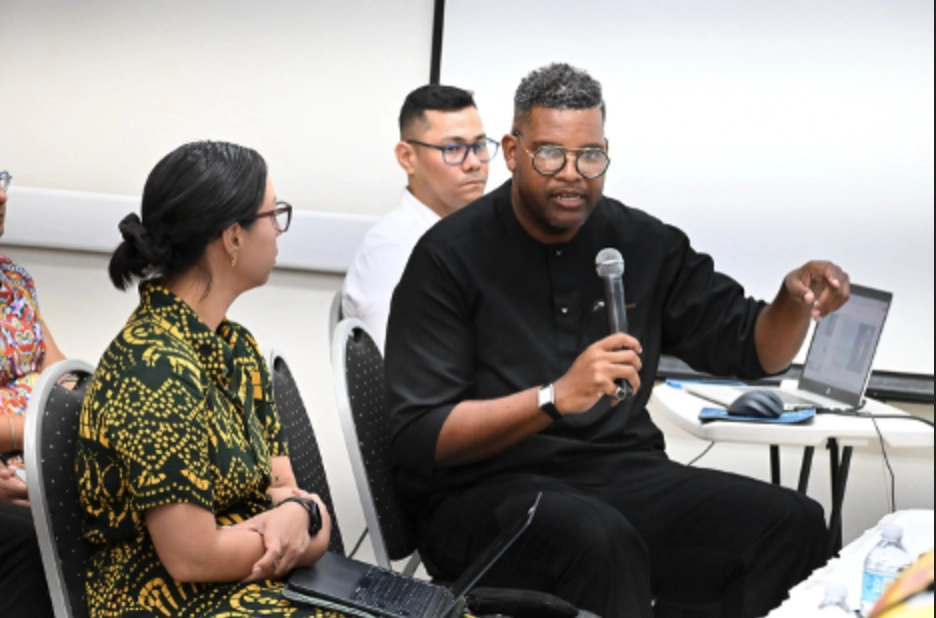
The Hon. Jonathan Reid, Barbados Minister of Innovation, Industry, Science and Technology speaking to the glider students on the current state of technology and innovation in Barbados.
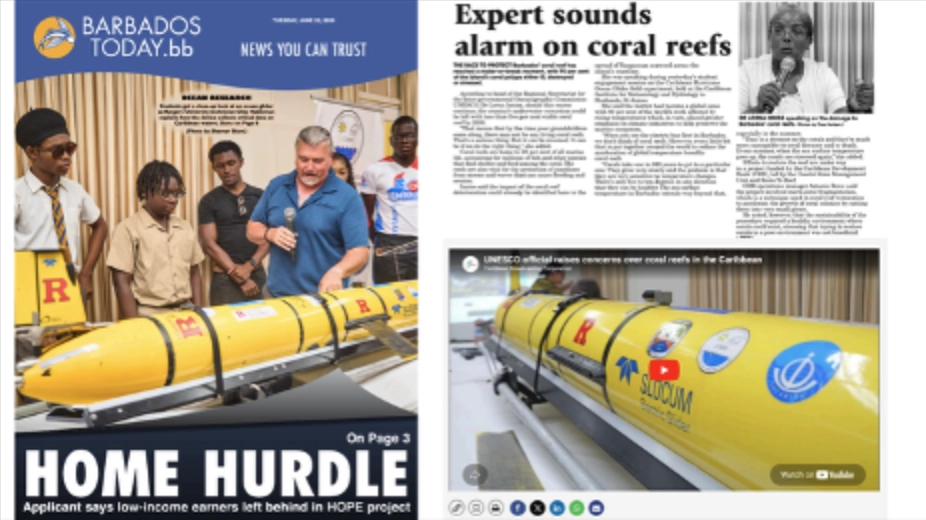
Barbados Today joined us at the meeting, summarizing the scientific needs for glider data in an article.
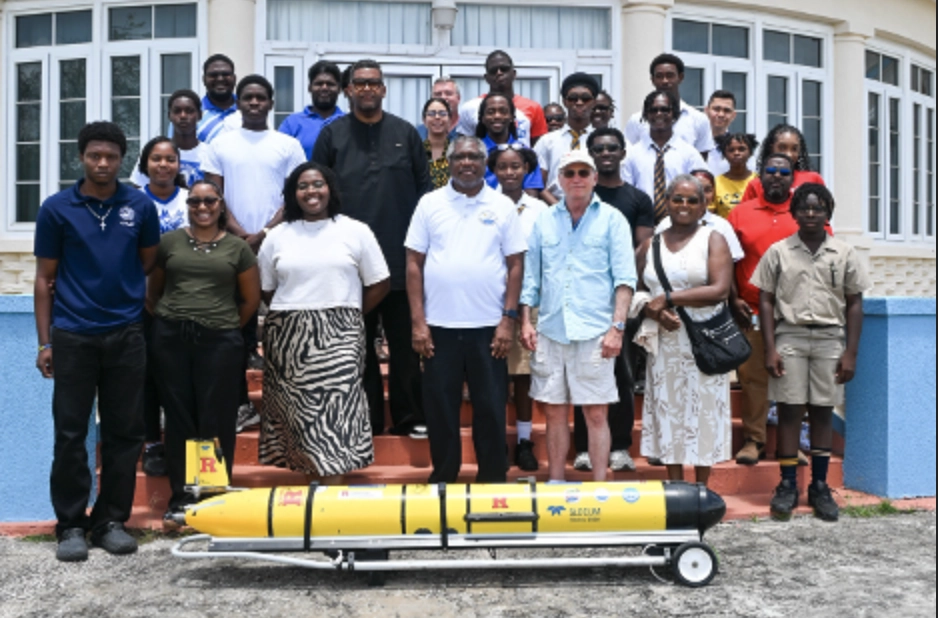
The pre-deployment panel discussion during our visit, focused primarily on the glider technology and potential impacts of the glider data, with significant interest from the school community. Teachers and inquisitive students represented seven schools from the region, with half of the discussion’s total attendees being students. Student questions ranged from how the glider works internally, biological interactions (sharks, etc.) and even what else the glider may be able to accomplish in the future. Discussions and questions integrate seamlessly with the IOCARIBE component of the GOOS’ Blue Schools network, introducing oceanographic principals and technologies to future generations.
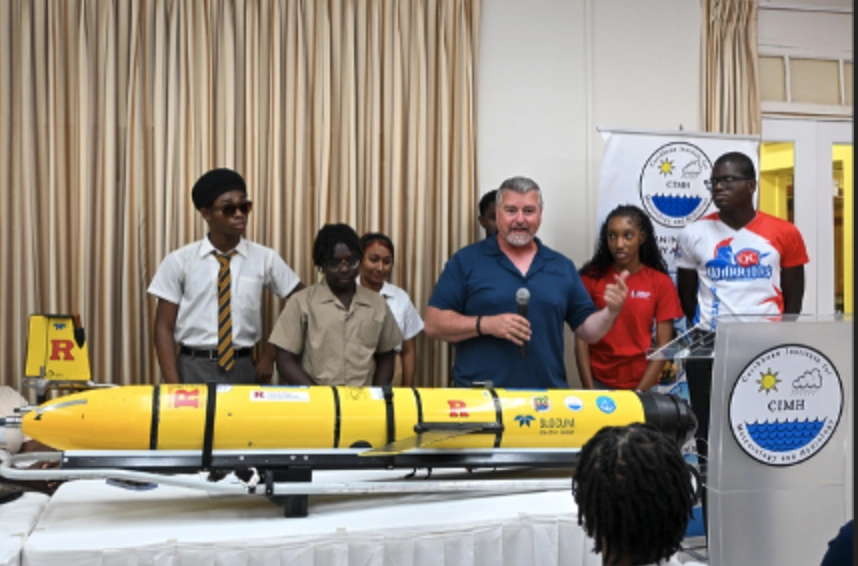
Rutgers glider technician Chip Haldeman speaks to students about the current and future of the technology.
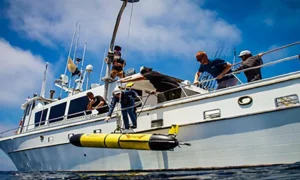
Post-discussion activities concluded with a pre-deployment checkout of Rutgers’ glider RU29 prior to its actual deployment ~3 km offshore, on the western coast of Barbados. 14 students, 2 teachers, and several IOCARIBE staff members accompanied Rutgers and Barbados Blue on a deployment that will span several months with the glider at sea collecting data.
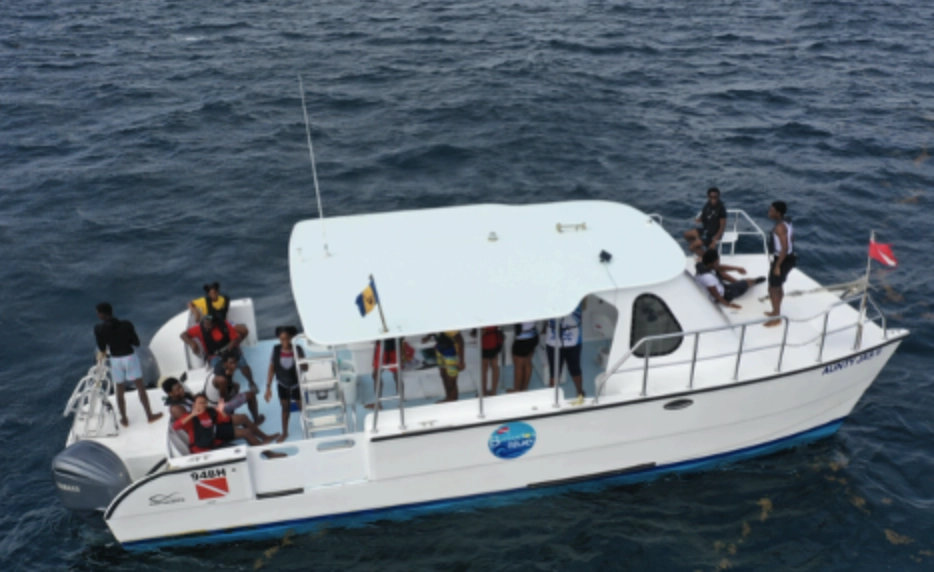
Barbados Blue vessel Aunty Jas with local students, teachers, and IOCARIBE/UNESCO staff.
Video of glider RU29’s deployment. Video credit: Leah Hopson, Courtney Forde, Scott Glenn.
Many thanks to the IOCARIBE-GOOS and CIMH team for hosting us. RUCOOL is looking forward to continuing a great partnership!